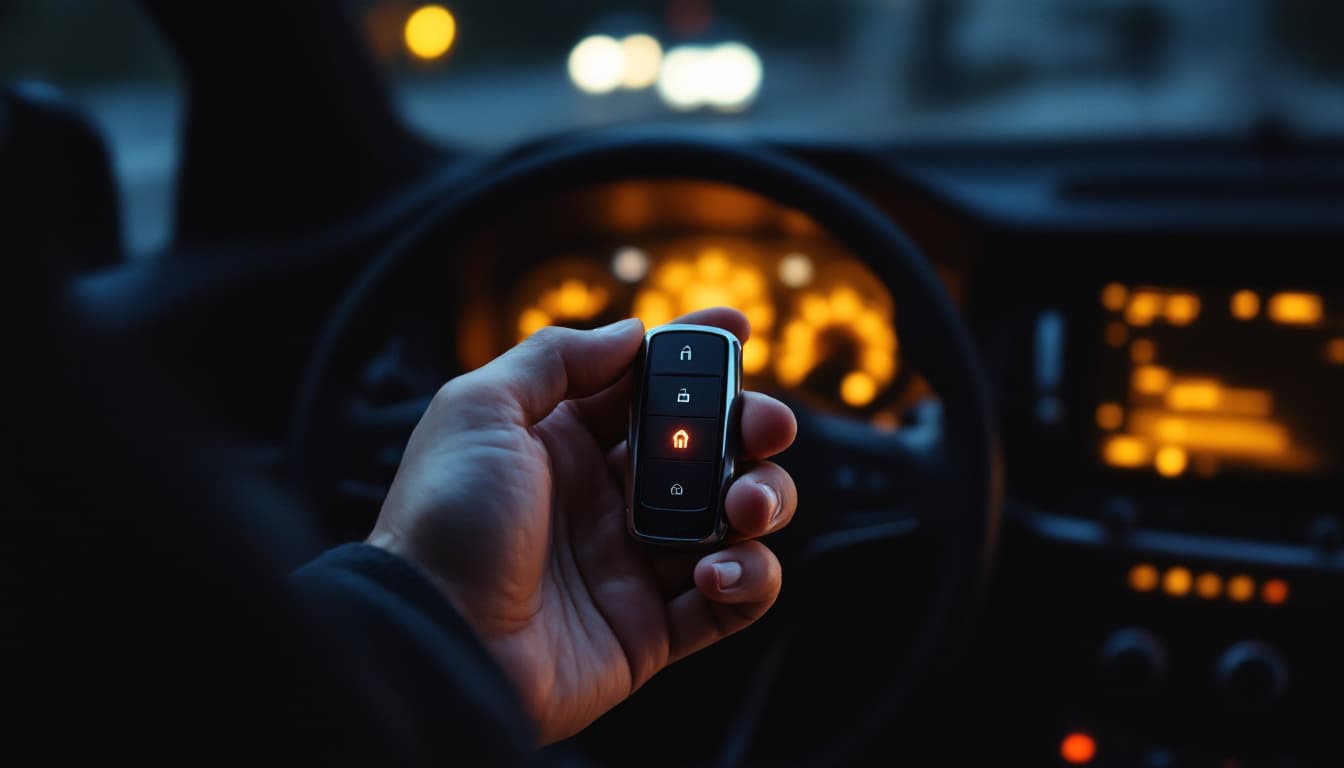
Smart Key System Malfunction Warning in Keller TX — What It Means and What It Costs
Your Toyota or Lexus dash reads Smart Key System Malfunction. Six causes ranked by how often they are actually the problem, how to start the car right now, and what each fix costs in Keller TX.
Smart Key System Malfunction Warning in Keller TX — What It Means and What It Costs
It is an alarming message for something that is usually cheap. The dash announces a system failure, and the fix is very often a coin cell that costs less than lunch. Call or text (817) 968-3866 if the steps below do not get you moving.
Quick Answer
Smart Key System Malfunction means the vehicle briefly could not complete its conversation with the key. On Toyota and Lexus the most common causes, in order, are a weak fob battery, a low 12-volt vehicle battery, radio interference from an accessory, an antenna or receiver fault, and a steering lock or certification module failure. Fixes run from $20 for a battery to $200 to $550 for a receiver module.
First: How to Start the Car Right Now
Before diagnosing anything, get moving. Every Toyota and Lexus with push-button start has a passive backup that works with a completely dead fob battery.
Hold the fob flat against the START button itself — on most Toyota and Lexus models that is the designated spot, and on some it is a marked point on the steering column or a slot in the console. Press the brake pedal fully, hold the fob there, and press START. The vehicle powers the fob's transponder through a short-range coil and reads it directly. No battery required.
If that starts the engine, you have learned something valuable: the transponder and the vehicle's immobilizer are both fine, and your problem is on the radio side — almost certainly a battery or an interference issue. That single test eliminates the expensive half of this list.
Once it is running, leave it running until you are somewhere you can deal with it. And do not lock the fob inside.
What the Message Actually Means
The smart key system is a short-range radio conversation. Antennas in the doors, the cabin and the trunk broadcast a low-frequency challenge. The fob hears it, wakes up, and answers on a different frequency. A receiver module collects the answer, checks it against the vehicle's authorized list, and tells the body control module the key is present and genuine.
That conversation happens several times a second. Smart Key System Malfunction is the vehicle reporting that some part of it failed — not that any specific component is broken. It is a symptom, not a diagnosis, which is exactly why guessing at parts is an expensive way to approach it.
On Lexus the wording is usually a variation involving Smart Access. On Toyota it is the plain phrase. Some model years pair it with a key-shaped icon or a solid security light. The underlying meaning is the same.
Six Causes, Ranked by How Often They Are Actually It
1. Weak fob battery — the most common by a wide margin
A coin cell does not fail cleanly. It fades. Long before it is flat enough to stop working, it becomes flat enough to work most of the time — strong enough in the driveway, too weak in a cold parking lot or when the fob is in a back pocket with a phone against it.
That intermittency is exactly what produces this message. The car does not lose the key permanently; it loses it for a moment, logs a fault, and displays the warning.
Fix: a fresh coin cell, tested. $20 to $45 including a function check. If a fob has been in service more than about two years and you have never changed the cell, change it before you spend money on anything else.
Note that on some vehicles a battery change alone can leave the fob out of sync and needing re-pairing at $80 to $180 — the full sequence is in key fob not working after a battery replacement.
2. Low 12-volt vehicle battery — commonly missed because the car still starts
This one fools people, including some shops. The receiver module and the door antennas need steady voltage. A 12-volt battery that has aged past its useful life can still deliver enough current to crank a healthy engine while sagging badly enough during that crank to brown out the smart-key electronics.
The result is a system malfunction message on a car that started perfectly well, which feels contradictory and is not.
Tell: the message appears at start-up and then clears, or shows up more in cold weather, or started around the same time the car began sounding slightly slower to crank. Fix: test and replace the battery — that is a general-repair job, not a locksmith one, and we will tell you so rather than sell you a key.
3. Interference from an accessory
Wireless phone chargers, cheap 12-volt adapters, dash cameras and aftermarket alarms all emit in ranges that can sit on top of a short-range key system. We see this most often when someone adds a charging pad to a console that happens to sit near a cabin antenna.
Tell: the problem started within days or weeks of something being installed or plugged in. Test: unplug it, remove the fob from the pad, and drive for a day. Fix: free, if that is it. Relocating the accessory solves it permanently.
This is also worth checking if an aftermarket remote starter was fitted — that class of problem is covered in remote start works but the key will not start the car.
4. A second fob on the same ring
Two smart fobs touching each other can occasionally confuse the exchange, and a fob pressed against a phone or a stack of RFID cards can be shielded enough to drop out. It is not common, but it costs nothing to rule out.
Test: separate the fobs, hold the suspect fob clear of everything else, and try again.
5. Antenna or receiver module fault — the first genuinely expensive one
If the backup start method works reliably, fresh batteries change nothing, and no accessory is involved, the fault is likely on the vehicle side. A door or cabin antenna can fail, its wiring can chafe, or the receiver module itself can go intermittent.
This is where diagnosis earns its fee. A scan tool reads which antenna zones are reporting and which are silent, and that narrows a whole-vehicle problem down to one connector.
Fix: antenna $150 to $400, receiver module $200 to $550. Diagnosis is $60 to $150 and applies to the repair.
6. Steering lock or certification module — the least common, most serious
Toyota and Lexus vehicles with an electronic steering lock use a dedicated actuator, and some use a separate certification module that holds the key authorization data. When either fails, the smart key warning is often accompanied by a steering wheel that stays locked, or by a vehicle that will not power up past accessory.
This is genuine module work: replacement plus programming and key authorization, quoted individually. Our Lexus certification ECU and smart key module programming notes explain what that involves, and Lexus smart key immobilizer reset covers the authorization side.
What Each Outcome Costs
| Fix | Typical cost |
|---|---|
| Fob coin cell replacement and function test | $20 – $45 |
| Re-pairing an existing fob after a battery change | $80 – $180 |
| Accessory interference — relocate or remove | Often free |
| Diagnosis at your location | $60 – $150, applied to the repair |
| Door or cabin antenna | $150 – $400 |
| Smart key receiver module | $200 – $550 |
| Replacement proximity smart key, programmed | $200 – $450 |
| Steering lock or certification module work | Quoted individually |
| Mobile service call to your location | $45 – $95 |
| After-hours surcharge | ~$100, quoted up front |
The spread here is the honest picture: this message covers a $28 fix and a $500 fix, and only a diagnosis separates them. Anyone quoting a module replacement over the phone from the warning text alone is guessing.
The Order We Actually Work It
- Backup start test. Does the fob start the car when held to the button? This splits the problem in half in ten seconds.
- Fresh coin cell in the fob. Retest.
- Test the second fob. If the spare behaves perfectly, the fault is in the first fob, not the vehicle.
- Check 12-volt battery voltage and state of health.
- Remove every accessory from the cabin — charger, dash cam, adapters — and retest.
- Only then scan, and read which antenna zones are live.
Steps one through five cost almost nothing and resolve the clear majority of these calls. Step six is where the fee starts, and by then it is buying real information rather than a guess.
When to Stop Driving It
Most of the time this warning is an inconvenience. There are two situations where it is not.
If the message is accompanied by a locked steering wheel or a vehicle that will not power up, stop and call — that is the steering lock or certification path, and continuing to cycle it can leave you stranded somewhere worse.
If the vehicle starts and then dies a second or two later, that is not the smart key system at all; that is the immobilizer refusing the key after the engine fires, which is a different fault with a different fix. See car starts then dies after two seconds.
And if the dash instead says the key is simply not detected rather than reporting a malfunction, that is a narrower problem with a shorter list of causes — key not detected on a push-button start covers it directly.
Frequently Asked Questions
Can I still drive with a Smart Key System Malfunction message?
Usually yes, if the car started normally and the steering wheel is free. The risk is not that the engine stops — it will not — but that the vehicle may not restart after you shut it off. Do not shut it down somewhere inconvenient until you have sorted it out.
Will a dead key fob battery really cause a system malfunction warning?
Yes, and it is the single most common cause. A fading cell works intermittently, and an intermittent key is exactly what triggers the fault. Change it first before anything else.
Why does the message appear when the car still starts fine?
Because the vehicle logged a momentary failure in the key conversation, not a permanent one. A weak fob battery or a sagging 12-volt battery both produce that pattern. The message is reporting a stumble, not a breakdown.
My spare fob works perfectly. What does that tell me?
That the vehicle side is healthy and the problem is in your primary fob. That is good news, because it means a battery, a re-pair at $80 to $180, or at worst a replacement fob — and not an antenna or a receiver module.
Could my wireless phone charger be causing this?
Yes, and it is a recurring culprit. If the problem began after a charging pad, dash cam or cheap 12-volt adapter was added, unplug it and drive for a day. Relocating the accessory fixes it for free.
How much will it cost to fix?
Between $20 and $550 depending on which of the six causes it is. A coin cell is $20 to $45. A receiver module is $200 to $550. Diagnosis at your location is $60 to $150 and comes off the repair if you proceed.
Do I need a new key?
Usually not. A new proximity key is the answer only when the fob itself is water-damaged, physically broken or genuinely lost. Most of these warnings are resolved without touching the key at all.
Get It Diagnosed Before You Buy Parts
This message has a $20 answer and a $500 answer, and they look identical on the dash. Call or text (817) 968-3866 with your year, make and model and what the car is doing, and we will walk you through the free checks on the phone first. Mobile service across Keller, Southlake, Colleyville, Watauga, Haslet, Argyle, Justin and North Richland Hills.
Written by the Keller Locksmith automotive team, who diagnose Toyota and Lexus smart key faults across Tarrant and Denton County every week.
Need a locksmith now?
Licensed mobile automotive locksmith serving the area. 30-90 minute response.
Call (817) 968-3866