Lexus Certification ECU & Smart Key Module Programming — Keller TX
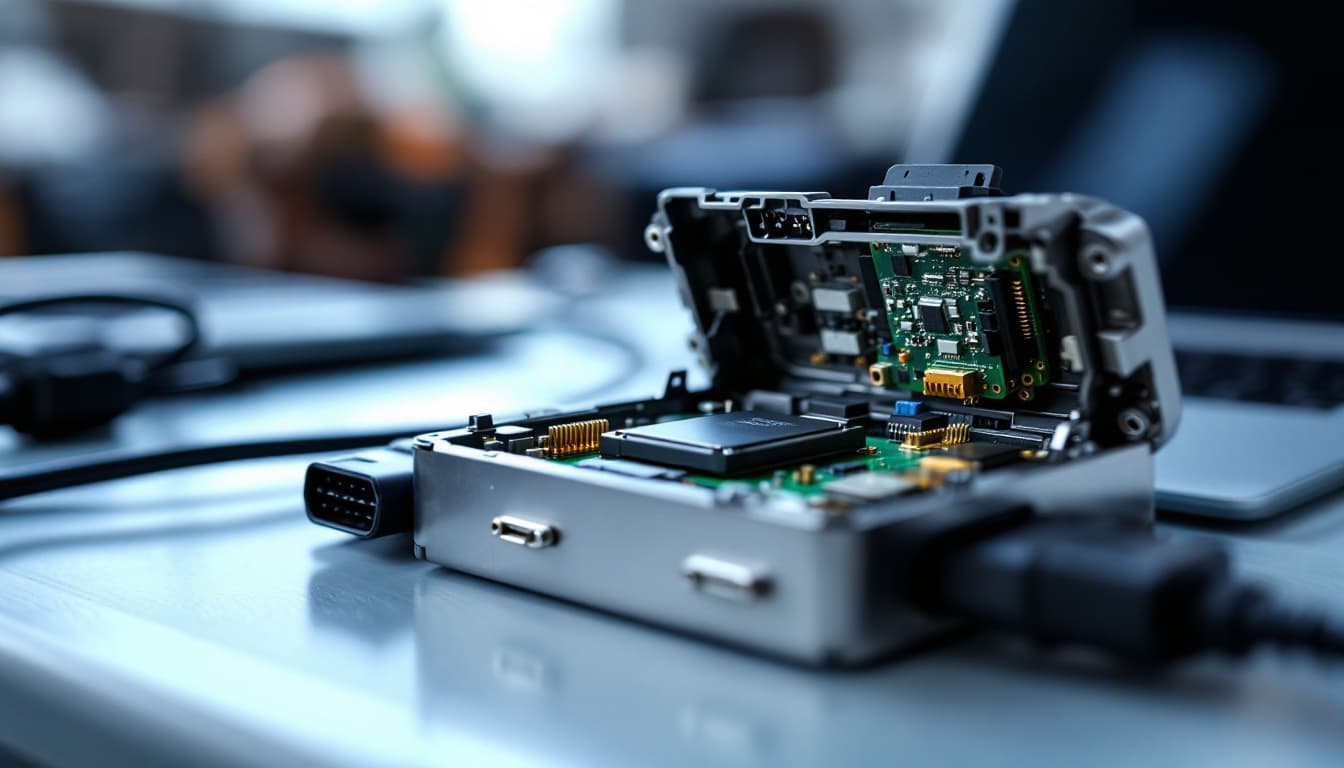
The Certification ECU is the module that decides whether your Lexus accepts a key at all. A Keller TX locksmith explains what it does, the symptoms of a failing one, why a replacement must be programmed, and real cost ranges.
Nearly every Lexus no-start call we take turns out to be a key. A small and genuinely interesting minority turns out to be the module that reads the key — and if you replace that module without programming it, you own a very expensive part that does nothing. This is the post for that minority. Call or text (817) 968-3866.
Quick Answer
The Certification ECU — often called the smart key ECU or the ID code box — is the module that authenticates your Lexus key and tells the rest of the car whether to allow a start. Programming a replacement or re-registering keys to it in the Keller area typically runs $350–$700, depending on the model and whether new keys are needed at the same time. Diagnosis comes first, because most cars that look like a module failure are actually a key, a fob battery, or a 12V battery.
Keller Pricing
Ranges only, as of August 2026. These are diagnosis-dependent jobs and the honest answer is that a firm number comes after the vehicle is in front of us.
| Service | Typical range |
|---|---|
| Immobilizer / smart-key system diagnosis | $95–$180 (often credited toward the repair) |
| Register keys to an existing Certification ECU | $250–$450 |
| Program a replacement Certification ECU | $350–$700 |
| Module programming plus two new smart keys | $600–$1,000 |
| Related body/immobilizer module coding | $300–$600 |
| Second key added during the same visit | $180–$300 extra |
Module work is priced as diagnosis plus procedure, not as a flat part swap. Anyone quoting a firm Certification ECU number over the phone without seeing the car is guessing.
What the Certification ECU Actually Does
Think of your Lexus smart-key system as a conversation between four participants.
- The fob broadcasts an encrypted rolling credential.
- Antennas in the doors, cabin, and trunk pick it up.
- The Certification ECU checks that credential against its stored list of authorized keys and decides yes or no.
- The engine control unit and steering-lock circuit act on that decision — releasing fuel and spark, or refusing.
The Certification ECU is the gatekeeper in the middle. It holds the registry of which keys this specific vehicle trusts. That registry is why a brand-new fob out of the box does nothing until it is registered, and why registration is a security operation rather than a pairing button.
It also explains the part owners find surprising: the module is married to the vehicle. A used Certification ECU pulled from a donor Lexus at a salvage yard arrives already carrying somebody else's key registry. Bolting it in does not import your keys — it imports a stranger's, and your keys become the unauthorized ones.
Symptoms That Actually Point at the Module
Most no-starts are not this. Here is how we separate the real cases.
Multiple known-good keys all fail at once
One key failing is a key problem. Every key failing simultaneously — including a spare that has sat untouched in a drawer for two years — points upstream. Keys do not conspire.
The car intermittently refuses to recognize any fob, then recovers
Classic marginal-module or marginal-connection behavior. It works Monday, fails Thursday in the Keller Town Center lot, works again after sitting. Intermittent faults are the hardest and most expensive to chase, which is exactly why we diagnose rather than guess.
The start button does nothing, but the dash powers up fully
If the vehicle has plenty of electrical life and simply will not acknowledge that a key is present, the authentication path is a legitimate suspect. Compare that against a dying 12V battery, where the dash flickers, chimes behave oddly, and everything is generally unhappy.
A module was replaced by someone else and now nothing works
We get these. A shop or a previous owner swapped a control module — sometimes a used one — without the programming step. The car is not broken. It is correctly refusing keys that the newly installed module has never been told to trust.
After a theft attempt or column damage
Break-ins that damage the steering column or the area around the start button can take out more than the obvious. In these cases a key alone is rarely the whole repair, and we say so before taking your money.
What Is Usually Wrong Instead
Being straight with you matters more here than selling module work.
- A dead 12V battery. On a smart-key Lexus a weak battery reproduces almost every module symptom. This is the single most common false alarm.
- A dead fob coin cell. Cheap, instant, and worth eliminating first. Most Lexus models also support a backup start method using the fob held against a specific point in the cabin — check your owner's manual.
- A failed key, not a failed system. Water damage, a cracked board from a drop, a worn emergency blade. Our immobilizer reset guide walks through separating a key fault from a system fault.
- A worn ignition or steering-lock mechanism on turn-key Lexus models, which presents as "the key does not work" but is mechanical. See Lexus ignition switch repair.
We check all of that before anyone discusses a module.
How Programming a Replacement Module Works
When diagnosis genuinely lands on the Certification ECU, the sequence is:
- Confirm the fault with the vehicle in front of us — codes, communication tests, and behavior, not a guess from a symptom list.
- Verify ownership. Photo ID plus registration, title, or insurance showing the same VIN and matching name. Non-negotiable, because this procedure produces authority over the vehicle.
- Install and program the replacement module, then build a fresh registry of authorized keys against it.
- Register every key you intend to keep. Any key not registered in this session stops working — which is genuinely useful if a key was stolen.
- Verify. Start the car, cycle every door, test the trunk, test each key individually. A module job is not finished because the engine ran once.
That fourth step deserves emphasis. Bring every key you own to the appointment. A key left in a kitchen drawer at home is a key that will not start the car tomorrow, and re-registering it later means another appointment.
The Honest Boundary
We would rather turn work away than oversell it.
A used module from a salvage yard is usually the wrong path. On many Lexus platforms these modules are locked to their original vehicle in ways that make reuse impractical or impossible. If a used unit is genuinely workable on your specific model we will say so; if it is not, we will not take your money to find out together.
The newest Lexus models are their own conversation. Key and module architecture has continued to tighten, and there are late-model configurations where a dealer path is the correct answer. We will tell you that plainly rather than charging you for a diagnostic that ends in a shrug.
Module programming is not engine tuning. This work authenticates keys and restores immobilizer function. It is a different discipline from powertrain calibration — closer to what happens in PCM and ECU reprogramming or transmission control module programming, but scoped to security rather than driveability.
How the Keller Appointment Works
Diagnosis happens at your vehicle. Coverage runs across Keller 76248, Southlake, Colleyville, Grapevine, Watauga, Haslet, Argyle, Justin, North Richland Hills, and the surrounding Tarrant and Denton County communities.
When you call, tell us: the model and year, whether more than one key fails, whether the dash lights come up normally, and whether any module has been replaced by anyone recently. That last question saves more diagnostic time than any other.
Frequently Asked Questions
What is a Certification ECU on a Lexus?
It is the module that authenticates your smart key and authorizes the vehicle to start. It stores the registry of which keys the car trusts, which is why new keys must be registered to it rather than simply paired.
Can I install a used Certification ECU from a salvage yard?
Usually not successfully. On many Lexus platforms these modules are tied to their original vehicle and arrive carrying the donor car's key registry. We will tell you honestly whether reuse is viable on your specific model.
How much does Lexus smart key module programming cost in Keller TX?
Typically $350–$700 for programming a replacement module, or $250–$450 to register keys to an existing one, as of August 2026. Diagnosis runs $95–$180 and is often credited toward the repair.
My Lexus will not recognize any key — is the module bad?
Possibly, but check the 12V battery first. A weak battery on a smart-key Lexus reproduces nearly every module symptom and is by far the most common cause of this complaint.
Do I need to bring all my keys to a module programming appointment?
Yes. Any key not registered during the session will stop working. Bring every key you intend to keep using.
Does the car have to be towed for module programming?
No. This is mobile work performed where the vehicle sits, as long as it is accessible and has enough battery to hold a stable programming session.
Lexus that will not accept any key in Keller, Southlake, or Colleyville? Call or text Keller Locksmith at (817) 968-3866 and we will diagnose it before anyone talks about replacing modules.
Written by the Kellerlocksmith Automotive Locksmith Team — mobile automotive locksmiths serving Keller, Southlake, Colleyville, Grapevine, and the surrounding Tarrant and Denton County communities.
Need a locksmith now?
Licensed mobile automotive locksmith serving the area. 30-90 minute response.
Call (817) 968-3866