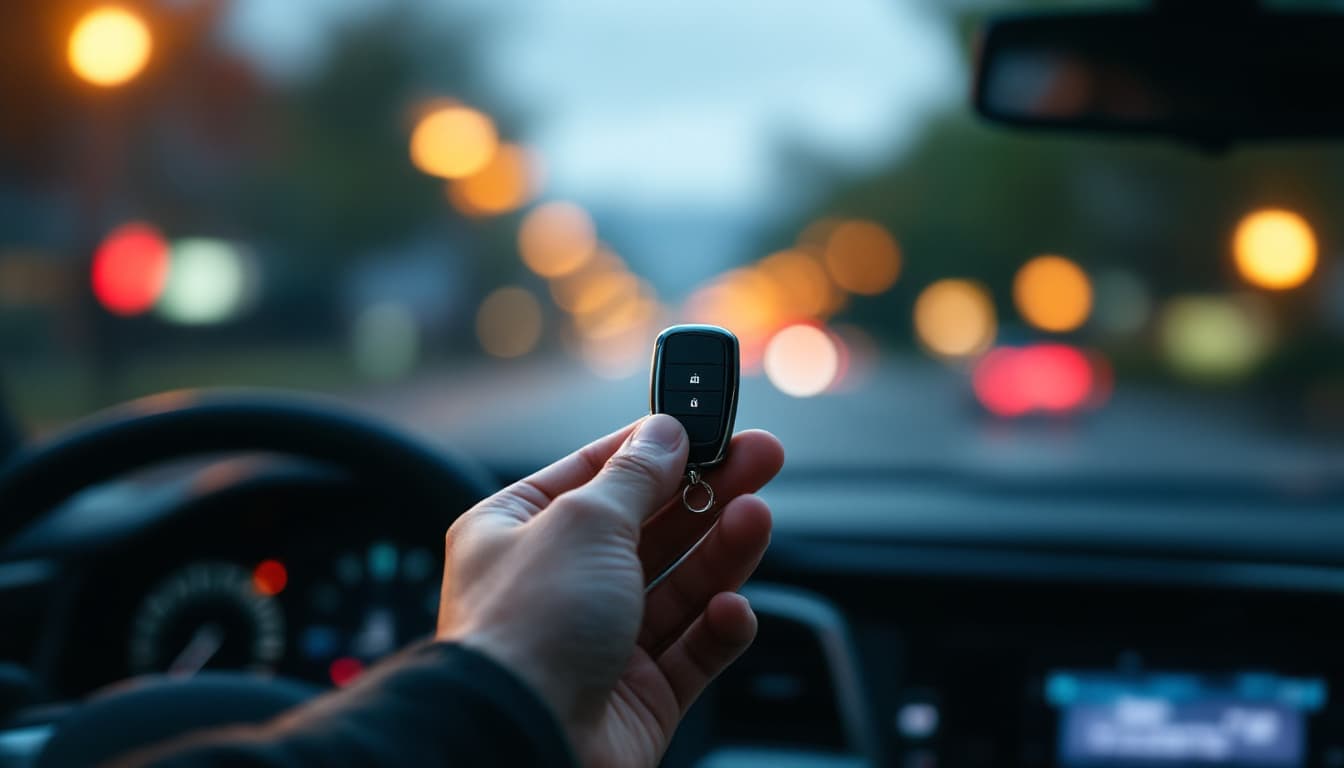
Key Not Detected on a Push-Button Start in Keller TX — Seven Causes
Your dash says the key is not detected while the fob is in your hand. Seven causes ranked by how often they are actually the problem, the backup start method that works on almost every push-button car, and what each fix costs in Keller TX.
Key Not Detected on a Push-Button Start in Keller TX — Seven Causes
The fob is in your hand. The dash insists it is not there. It is one of the more infuriating car messages because the evidence in front of you contradicts it — and in most cases the car is telling the truth: it genuinely cannot hear the fob, for a reason that costs a few dollars to fix. Call or text (817) 968-3866 if the quick fixes below do not get you moving.
Quick Answer
As of September 2026, the overwhelming majority of key not detected messages are a dead coin cell in the fob — a $5 fix — followed by signal blocking or interference and a weak 12-volt vehicle battery. Almost every push-button car has a backup start method that works with a completely dead fob. Real failures (antenna, receiver module, unpaired fob) run $80 to $550 and are diagnosed at your location.
Try This First: The Backup Start Method
Before anything else, because it works on the large majority of push-button vehicles and takes ten seconds.
Every push-button car is designed to start with a flat fob battery. The vehicle contains a short-range coil that can power and read the fob passively, the same way a hotel door reads a card. You just have to put the fob where the coil is.
The location varies by make. Common ones:
- Press the fob directly against the START button and push with the fob itself. Very common on Japanese and Korean vehicles.
- Hold the fob against a marked spot on the steering column, often just behind or below the column shroud.
- Drop the fob into a designated slot in the center console, the cupholder tray, or the glovebox. Some vehicles label it with a small key icon.
- Hold the fob against the underside of the start button surround while pressing with your other hand.
Press the brake, hold the fob in position, and press START. If it fires, you have proven the fob and the vehicle are both fine and the problem is the coin cell. Drive to buy a battery.
If you have never found your vehicle's backup location, it is in the owner's manual under "starting with a low key battery" — and it is worth knowing before you need it. The general technique is covered further in our dead key fob guide.
The Seven Causes, Most Likely First
1. A dead coin cell in the fob
By a wide margin the most common cause, and the cheapest.
Fob batteries last roughly two to four years and they do not fail gradually in a way most people notice. Range shrinks first — you find yourself standing closer to the car before it unlocks — and then one morning it is simply gone.
The tells: the car detects the fob when you hold it right against the button but not from the seat, the lock and unlock buttons only work up close, or the problem appeared over a period of weeks as range got shorter.
Fix: a coin cell, usually CR2025 or CR2032. $5 to $15, two minutes, no tools beyond a small flat blade. Take a photo of the orientation before you pull the old one — and if the fob still misbehaves after a fresh battery, that is a different and specific problem covered in key fob not working after battery replacement.
2. The fob is blocked or shielded
The signal is short-range and weak by design, and a surprising number of everyday objects stop it.
Common blockers: an RFID-blocking wallet or card sleeve, a metal phone case or MagSafe wallet stack, the fob buried under keys and coins in a bag, a metal thermos or laptop sitting on top of the bag, or the fob sitting against a phone that is actively wireless-charging.
The test: take the fob out, hold it up near the windshield or the start button, and try again. If it works, something in your pocket or bag was the antenna's problem all along.
Fix: $0.
3. Radio interference where you are parked
Underrated and genuinely frustrating because the car works fine everywhere else.
Smart-key systems share their band with a lot of hardware. Interference sources we see repeatedly: an aftermarket dash cam or its cheap USB charger, aftermarket LED headlight drivers, a wireless phone charger in the console, a nearby vehicle running a remote start transmitter, and in a few genuine cases a particular parking structure or a spot near broadcast equipment.
The test: push the car a few feet, or try starting it in a different location. If the fault follows the place rather than the car, it is interference. If a dash cam or LED kit was installed shortly before the problem started, unplug it and try again.
Fix: $0 to identify; the cost of removing or relocating the offending accessory to resolve.
4. A weak 12-volt vehicle battery
This one confuses people constantly, because the car still cranks.
A 12-volt battery that has dropped below its healthy range can leave the vehicle with just enough power to run the dash and the starter but not enough to hold the smart-key receiver's supply steady. Result: strange, intermittent, wrong-looking messages, and key not detected is a common one. Hybrids and EVs have the same problem — the small 12-volt battery runs the electronics regardless of the size of the traction pack, and a flat 12-volt battery in a hybrid presents exactly like a dead car.
The tells: the message is intermittent, other electronics behave oddly at the same time, the car has been sitting, or the battery is over four years old.
Fix: battery test and replacement — a parts store or repair shop job, not a locksmith one, and we will say so.
5. The fob has lost its pairing
Less common, entirely real. A fob can drop out of the vehicle's authorized list after a deep battery discharge, a botched jump start, a module replacement, or unrelated electrical work.
The tell is that the fob is physically fine — fresh battery, buttons still lock and unlock the doors on some platforms — but the vehicle refuses to acknowledge it for starting. If a second fob works and the first does not after a confirmed-good battery, pairing is the leading suspect.
Fix: re-pair the existing fob to the vehicle. $80 to $180, at your location, far cheaper than a new key.
6. A failed interior antenna
Your vehicle does not have one antenna for the smart-key system; it has several, positioned to cover the cabin, the trunk and sometimes the exterior door handles. They map the fob's location so the car knows whether it is inside or outside.
When one fails, the failure is often positional and looks like superstition: the car detects the fob in the passenger seat but not the driver's seat, or from outside but not inside, or only when you hold it up high.
The tell: detection depends reliably on where in the car the fob is.
Fix: $150 to $400 depending on which antenna and how buried it is.
7. A failed smart-key receiver or control module
The least common and the most expensive. The module that receives and authorizes the fob has failed outright.
The tell is total, consistent, location-independent non-detection with two different fobs, both confirmed to have good batteries, with a healthy 12-volt battery. At that point the vehicle side is at fault.
Replacement modules typically require programming to your VIN and your fobs re-registered — standard module programming work. For a worked example of the immobilizer-module version of this on one platform family, see Hyundai Tucson and Elantra immobilizer module programming.
Fix: $200 to $550 for programming and registration; more if the module itself is replaced.
What It Costs
| Cause | Typical range |
|---|---|
| Fob coin cell replacement | $5–$15 |
| Shielding or interference, once identified | $0 |
| Diagnosis at your location, applied to the repair | $60–$150 |
| Re-pair an existing fob to the vehicle | $80–$180 |
| Replacement smart key, spare with a working key | $220–$450 |
| Replacement smart key, all keys lost | $320–$560+ |
| Interior or exterior antenna replacement | $150–$400 |
| Smart-key receiver or module programming | $200–$550 |
Ranges as of September 2026 for Keller and north Tarrant County. Vehicle 12-volt battery replacement is not included — that is a parts store or repair shop item.
A Note on Cards and Phone Keys
Not every push-button vehicle uses a fob. Some use a card you tap against a pillar or a console pad, and many now support a phone as a key over Bluetooth or ultra-wideband.
Those systems fail in their own ways: a phone whose battery died or whose Bluetooth got switched off, a card demagnetized or cracked in a wallet, a phone key that dropped its pairing after an operating system update. The diagnostic logic is the same — prove whether the credential or the vehicle is at fault — but the fixes differ, and a lost card is its own errand. Our Tesla key card replacement guide walks through the card-based version of this problem.
The practical advice is identical across all of them: keep one physical backup credential that does not depend on a battery you forgot to charge. For fob-based cars that means a programmed spare, and the case for cutting one before you need it is in why you should cut a second key first. Cost and timeline for the proximity systems specifically are in our push-to-start smart key replacement guide, and one platform-level example is the Prius and Prius Prime spare smart key page.
When to Call
Call an automotive locksmith when a fresh coin cell did not fix it, when a second known-good fob also fails, when detection depends on where the fob is sitting in the car, or when the problem started after module or electrical work.
Call a parts store or repair shop first when the 12-volt battery is over four years old, the car has been sitting, or other electronics are misbehaving at the same time. A $180 battery that fixes five symptoms at once beats a $400 key that fixes none of them.
And if none of it works and you are stuck in a parking lot: the backup start method at the top of this page resolves a large share of these calls without anyone driving out to you. Try it before you book anything.
Frequently Asked Questions
Why does my car say key not detected when the key is right there?
The vehicle genuinely cannot hear the fob. The usual reasons are a dead coin cell, the fob being shielded by a wallet, phone or bag, radio interference where you are parked, or a weak 12-volt vehicle battery leaving the receiver underpowered.
How do I start a push-button car with a dead key fob?
Hold the fob against the designated spot — usually the START button itself, a marked point on the steering column, or a slot in the console — press the brake, and press START. The vehicle powers and reads the fob passively, so no battery is required in it.
Can a weak car battery cause a key not detected message?
Yes, and it is commonly missed because the car still cranks. A 12-volt battery below its healthy range can leave the smart-key receiver without a steady supply, producing intermittent and wrong-looking messages. Batteries over four years old are the first thing to test.
How much does it cost to fix a key not detected problem?
A coin cell is $5 to $15. Re-pairing an existing fob is $80 to $180. An antenna is $150 to $400 and a receiver module is $200 to $550. Diagnosis at your location is $60 to $150 and applies to the repair.
My second fob works but my main one does not. What is wrong?
Either the coin cell in the main fob or its pairing. Fit a fresh battery first. If it still fails with a confirmed-good battery while the spare works, the fob has dropped out of the vehicle's authorized list and needs re-pairing — which is far cheaper than a replacement.
Could a wireless phone charger or dash cam cause this?
Yes. Both are recurring culprits. Wireless chargers and cheap accessory power supplies emit in ranges that interfere with short-range key systems. If the problem began shortly after an accessory was installed, unplug it and test.
Do I need a new key, or can my existing one be fixed?
Most of the time the existing fob is fine and the fix is a battery, a re-pair, or something on the vehicle side. A new key is only needed when the fob itself is water-damaged, physically broken, or genuinely lost.
Get It Diagnosed Where You Are Parked
Coin cell, shielding, interference, battery, pairing, antenna, module — in that order. The first three are free or nearly free and account for most of these calls.
Keller Locksmith handles smart key programming, fob re-pairing, antenna and receiver diagnosis and all-keys-lost origination across Keller, Southlake, Colleyville, Watauga, North Richland Hills, Hurst, Euless, Bedford, Haslet, Argyle and Justin. Call or text (817) 968-3866 with your year, make, model and whether a second fob behaves the same way.
Written by the Keller Locksmith Automotive Locksmith Team — mobile automotive key, immobilizer and module-programming service across Keller and north Tarrant County.
Need a locksmith now?
Licensed mobile automotive locksmith serving the area. 30-90 minute response.
Call (817) 968-3866