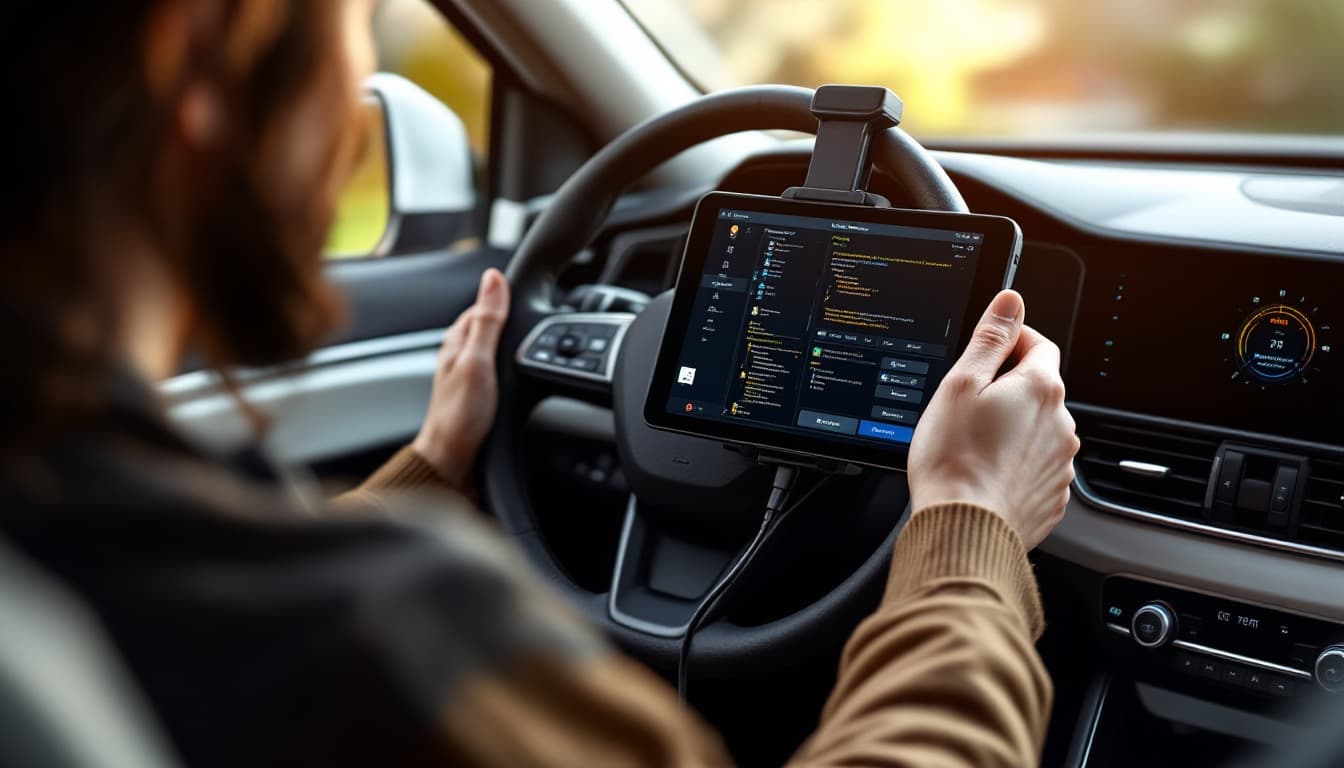
Hyundai Tucson & Elantra Immobilizer Module Programming — Keller TX
Hyundai Tucson or Elantra not starting after a module swap? Keller TX locksmith explains immobilizer and smart key unit programming, PIN-based key registration, and what a replacement ECU needs before it runs.
A Hyundai that cranks strongly and then dies two seconds later is almost never a mechanical problem. It is the immobilizer declining to authorize whatever key you are holding — and after a module replacement, that refusal is guaranteed, because the new module has never been introduced to your keys. Call or text (817) 968-3866 for mobile module and key programming across Keller and northeast Tarrant County.
Quick Answer
Hyundai immobilizer or smart key module programming in Keller typically runs $220–$480, plus $95–$200 per key that has to be registered afterward. Most jobs take 60 to 120 minutes on-site. The critical thing to know: Hyundai key registration is PIN-protected, and that PIN is derived from the vehicle rather than being something you can look up — which is exactly why an off-the-shelf scan tool cannot complete the job.
Hyundai Module and Key Programming Pricing
Ranges only, as of August 2026:
| Service | Typical range |
|---|---|
| Immobilizer control unit programming | $220–$400 |
| Smart key control unit programming | $280–$480 |
| ECU replacement — configuration and key sync | $320–$600 |
| Key registration after module work (per key) | $95–$200 |
| Smart key fob supplied and registered | $200–$400 |
| Diagnosis — module, key, or something else | $85–$150 |
| All keys lost with module intact | $260–$430 |
The Three Modules That Matter
People say "immobilizer" as though it is one box. On a modern Hyundai it is a small system of cooperating parts, and knowing which one failed determines what you pay.
Immobilizer control unit (bladed-key vehicles). Reads the transponder chip in the key head through an antenna ring around the ignition and tells the engine computer whether to allow the engine to run. Common on Elantras and Tucsons with a conventional key.
Smart key control unit (push-to-start vehicles). Handles proximity detection, the start button, and the rolling authentication with the fob. If a push-to-start Tucson intermittently says it cannot detect the key while the fob battery is fresh, this unit or its antennas are prime suspects.
Engine control unit. Holds its own copy of the security relationship. Replace an ECU and it arrives knowing nothing about your vehicle or your keys — both configuration and key sync have to be done before the car will run.
The reason "the shop replaced my module and now it will not start" is such a common call is that plenty of shops can install the hardware but are not equipped to complete the security side.
The PIN Is the Whole Story
Hyundai protects key registration behind a PIN tied to the specific vehicle. You cannot look it up in the owner's manual, it is not printed on the fob, and a generic code reader from an auto parts store cannot get past it.
Legitimate access to that PIN comes through manufacturer-sanctioned channels available to properly equipped automotive locksmiths and dealers. It is the same protection stopping someone with a $60 scan tool from registering a key to your Tucson in a parking lot in ten minutes — an inconvenience when you need a key, and an asset every other day of the year.
Practical implication when you call around: ask whether the provider can obtain the security PIN for your model year. If the answer is evasive, keep calling.
Symptoms That Point at the Module
Consistent with a module problem: the engine cranks strongly and shuts down after one to three seconds; a security or immobilizer light stays on solid or flashes rapidly; a scan tool cannot communicate with the immobilizer at all; the problem started immediately after a module, ECU, or cluster replacement; multiple keys all fail identically.
Probably not the module: one key fails while another works fine (that is a failed transponder in the bad key); no crank at all (battery, starter, or ignition switch); a check engine light with normal starting (that is emissions or driveability, not security); intermittent failure that a fresh coin cell fixes (dead fob battery).
That "one key fails, the other works" case matters — it is a cheap fix misdiagnosed as an expensive one, and we will tell you so rather than quoting module work.
After-Theft and Recovered Vehicles
Hyundai and Kia vehicles from certain model years were widely targeted, and we take a steady stream of calls on recovered cars and on vehicles with damaged ignition assemblies.
Two notes. First, if a thief damaged the ignition lock or the steering column, that is mechanical repair in addition to any security programming — two jobs, not one. Second, after a break-in or a theft attempt, have the key list purged and reprogrammed. If someone had access to your vehicle and its keys, a fresh key list is the only way to be certain no unknown credential remains registered.
Related reading on the sister platform: our Kia key replacement and immobilizer guide and Kia Seltos and Sportage spare key pieces cover the same architecture on Kia vehicles, and our Hyundai Veloster and Accent key replacement guide covers the smaller Hyundai models.
The On-Site Programming Process
- Diagnose first. We confirm the module is genuinely at fault before quoting programming. Programming a healthy module while the real fault stays in the car helps nobody.
- Verify ownership. Photo ID plus registration, title, or matching insurance — mandatory for anything touching the anti-theft system.
- Stabilize vehicle voltage. Module programming is the one job where a marginal battery can cause real damage; a voltage drop mid-write can leave a module unrecoverable. A maintainer goes on before anything is written.
- Obtain the security PIN through the sanctioned channel for your VIN.
- Program or configure the module.
- Register every key the vehicle should trust, and purge anything it should not.
- Clear codes and verify — start the car repeatedly, confirm no security light, test every fob function.
Other Modules, Other Jobs
If your symptoms are shifting quality rather than starting, that is a different module entirely — see our guide to automatic transmission programming. Body-side faults like lighting, locks, and remote functions live in the BCM, covered in our body control module programming guide. And if you want the general overview of how these systems fit together, start with car computer module programming explained.
We serve Keller 76248, Southlake, Colleyville, Watauga, North Richland Hills, Haslet, Argyle, Justin, and out through Tarrant and Denton County. Module work is well suited to mobile service, since a car that will not start is not driving itself to a shop.
Frequently Asked Questions
How much does Hyundai immobilizer module programming cost in Keller TX?
Immobilizer unit programming typically runs $220 to $400 and smart key unit programming $280 to $480, plus $95 to $200 per key registered afterward. Ranges as of August 2026.
My Hyundai cranks then dies after two seconds. Is that the immobilizer?
That is the classic immobilizer signature — the security system is cutting fuel or spark because it does not recognize the key. If one key fails and another works, though, the problem is the failed key rather than the module.
Why cannot my mechanic program my Hyundai key?
Hyundai key registration is protected by a vehicle-specific security PIN available only through manufacturer-sanctioned channels. Most general shops have the hardware skills but not that access.
Do I need to reprogram keys after an ECU replacement?
Yes, always. A replacement ECU arrives knowing nothing about your vehicle or your keys — both configuration and key registration have to be completed before the car will run.
My Tucson says it cannot detect the key even with a new fob battery. What now?
That points at the smart key control unit or its antennas rather than the fob. We diagnose which before replacing anything, because the two have very different prices.
My Hyundai was broken into. Should I reprogram the keys?
Yes. If someone had access to the vehicle, purging the existing key list and registering fresh keys is the only way to be certain no unknown credential is still registered.
Car cranking but not starting after module work? Call or text (817) 968-3866 for mobile diagnosis and programming across Keller and northeast Tarrant County.
Written by the Kellerlocksmith Automotive Locksmith Team — mobile automotive locksmith service for Keller, Southlake, Colleyville, Watauga, Haslet, Argyle, Justin, and North Richland Hills.
Need a locksmith now?
Licensed mobile automotive locksmith serving the area. 30-90 minute response.
Call (817) 968-3866