Car Computer & Module Programming Explained: ECU, ECM, PCM, BCM & TCM (Keller TX)
A Keller TX automotive locksmith explains car computer and module programming — ECU, ECM, PCM, BCM, and TCM — what each one does, when it needs programming, and cost.
Modern vehicles are rolling computer networks. A single car can carry dozens of electronic control units talking to each other over a data bus, and when one of those modules is replaced, reset, or added, it almost always needs programming before the car will run right. If you are in Keller, Southlake, Colleyville, or anywhere across north Tarrant County and someone told you a module needs "programming" or "flashing," this guide explains what that means in plain English. Call or text (817) 968-3866 to talk through your specific vehicle and what it actually needs.
Quick Answer
Car computer programming is the process of loading the correct software and vehicle-specific data onto an electronic control module so it works with your car. The main modules are the ECU/ECM (engine), PCM (powertrain — engine plus transmission combined), TCM (transmission), and BCM (body — locks, lights, keys, windows). A new or used module is rarely plug-and-play: it usually needs to be flashed with software and configured to your VIN, and security-linked modules must be married to the immobilizer. A mobile automotive locksmith handles the key- and security-related programming on-site; heavy engine calibration is sometimes a dealer or repair-shop job.
What Each Module Actually Does
The acronyms get thrown around loosely, so here is the honest breakdown.
ECU / ECM — Engine Control Unit / Module
The ECM is the brain that manages the engine: fuel injection, ignition timing, idle, emissions. "ECU" is often used as a catch-all term for any control unit, but when people say ECU they usually mean the engine computer. When an ECM is replaced, it must be flashed with the manufacturer's calibration file and, on most vehicles built in the last two decades, linked to the immobilizer so the engine will start with your key.
PCM — Powertrain Control Module
On many domestic vehicles, the engine and transmission computers are combined into one PCM. If your vehicle has a PCM instead of separate ECM and TCM units, that single module controls both — and replacing it affects both engine and shifting behavior, plus the anti-theft link.
TCM — Transmission Control Module
Where the transmission has its own computer, the TCM manages shift points, torque converter lockup, and adaptive shift learning. A replacement TCM often needs an adaptive relearn drive cycle after programming so shifts feel smooth rather than harsh.
BCM — Body Control Module
The BCM is the one automotive locksmiths care about most. It runs the "body" electronics: door locks, interior and exterior lighting, power windows, wipers, chimes, and — critically — it is often part of the immobilizer and keyless-entry system. On many cars the BCM stores the key data or coordinates with the immobilizer, so a replaced BCM means the keys have to be re-registered before the car recognizes them.
When Does a Module Need Programming?
You will hear "it needs programming" in several situations:
- A module was replaced (failed, water damage, collision, corrosion). A new blank or used module must be flashed and configured to your VIN.
- All keys were lost or a key is being added — the immobilizer/BCM has to learn the new key.
- A used module from a salvage car was installed and still carries the donor vehicle's data.
- A software update or recalibration is issued by the manufacturer to fix a driveability or emissions issue.
- A component was added (remote start, certain aftermarket accessories) that the network has to recognize.
Programming vs. Flashing vs. Cloning — the Terms
These get used interchangeably but mean slightly different things:
| Term | What it means |
|---|---|
| Flashing / reflashing | Writing new software (calibration) onto a module, usually via the OBD-II port |
| Programming / configuring | Setting the module's parameters to your VIN, options, and immobilizer data |
| Cloning | Copying the data from your old module onto a replacement so the car sees it as the same unit |
| Immobilizer marriage | Linking a security-relevant module (ECM, PCM, BCM) to the anti-theft system so the engine will start |
For a locksmith, the security side — immobilizer marriage and key registration — is the core skill. Full powertrain recalibration is a different specialty.
How the Work Is Done
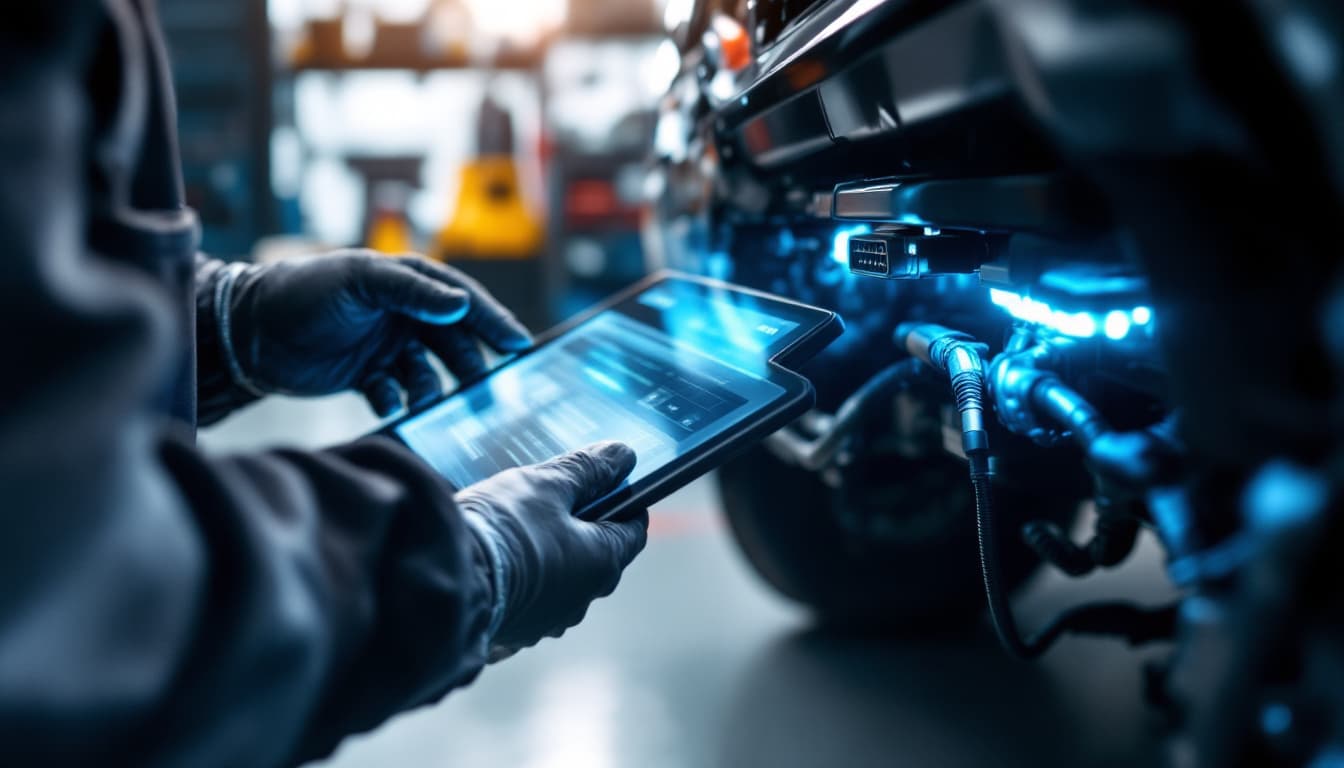
Almost all module programming happens through the OBD-II diagnostic port, the same connector under the dash that emissions testing uses. A technician connects a professional programming tool or a laptop running the correct software, reads the current module data, and writes the new configuration. For security-linked modules, the process also involves the anti-theft system, which is deliberately protected — manufacturers gate this access behind secure credentials.
The recognized industry credential for legitimate access to secure vehicle-security functions is registration with the National Automotive Service Task Force (NASTF) Vehicle Security Professional registry. This registry is the framework the industry uses so qualified professionals can perform key and immobilizer work responsibly. When you hire out module or key programming, it is fair to ask whether the technician works within that framework.
What It Costs
Programming cost depends heavily on the module, the make, and whether hardware is involved. General ranges in the Keller market:
| Job | Typical range |
|---|---|
| Key/immobilizer programming (add or all-keys-lost) | $75–$400+ |
| BCM configuration tied to keys | $150–$500+ |
| Module flashing/configuration (locksmith-side security) | $150–$600+ |
| Full powertrain ECM/PCM calibration (often dealer/shop) | Varies widely |
These are ranges, not quotes — the make, model, year, and exactly which module and function drive the real number. Push-to-start and newer encrypted platforms sit at the higher end. Always get a specific quote for your VIN before work begins.
Locksmith vs. Dealer vs. Repair Shop
- Mobile locksmith — best for key/immobilizer programming and many BCM/security tasks, done at your location, usually faster and less expensive than a dealer for these specific jobs.
- Dealer — required for some proprietary engine calibrations and warranty-covered reflashes; typically the most expensive and requires an appointment plus, if the car won't start, a tow.
- Independent repair shop — many well-equipped shops handle powertrain flashing; fewer handle the secure immobilizer side.
A Word on "Just Buy It Online and Plug It In"
Marketplaces sell used ECMs, PCMs, and BCMs cheaply, and it is tempting to order one and swap it yourself. The catch is that almost none of them are plug-and-play. A used module carries the donor vehicle's VIN, immobilizer data, and configuration. Without proper programming the car may not start, may throw a wall of fault codes, or may run poorly. Buying the part is often the easy 20%; getting it flashed, configured, and married to your immobilizer is the 80% that determines whether the car actually drives. Confirm the programming path before you buy the hardware.
Local Context for Keller Drivers
Keller and the surrounding north Tarrant and Denton County communities — Southlake, Colleyville, Watauga, North Richland Hills, Haslet, Argyle, Justin — skew toward newer vehicles, which means more encrypted immobilizers and more push-to-start systems. That is exactly the equipment that requires proper programming rather than a simple key cut. A mobile service that can bring the programming tools to your driveway or office parking lot saves the tow that a dead-immobilizer car would otherwise need to reach a dealership.
Frequently Asked Questions
What is the difference between an ECU and an ECM?
In everyday use they are often the same thing — the engine computer. Strictly, "ECU" (electronic control unit) is a generic term for any control module in the car, while "ECM" specifically means the engine control module. When a shop says your ECU needs programming, they almost always mean the engine or powertrain computer.
Can a locksmith program my car's computer?
A qualified automotive locksmith programs the security-related side — key and immobilizer registration, and configuration of security-linked modules like the BCM. Full engine/powertrain calibration is sometimes a dealer or specialized repair-shop task. Tell us your make, model, year, and what module is involved and we will tell you honestly whether it is a locksmith job.
Do I need to program a used module I bought online?
Almost always, yes. A used ECM, PCM, or BCM still holds the previous vehicle's VIN and immobilizer data. It has to be flashed and configured to your car — and married to your immobilizer — before it will work. Confirm that programming is possible for your specific part before purchasing it.
How long does module programming take?
Key and immobilizer programming is often 20–60 minutes on site. A module flash plus configuration can take longer depending on the vehicle and the amount of data written. Adaptive relearn on a transmission module may also require a short drive cycle afterward.
Will programming erase my settings or damage the car?
Done correctly with the right software and a stable power supply, programming is a routine, safe procedure. The main risk is an interrupted flash from low battery voltage, which is why a proper power supply is used during the process. That is another reason to have security-critical programming done by someone with the correct equipment rather than improvised tools.
Is module programming covered by my warranty?
Manufacturer-issued reflashes for recalls or service bulletins are typically handled by the dealer under warranty. Programming needed because a module failed outside warranty, or because keys were lost, is a paid service — where a mobile locksmith is usually the faster and more affordable option for the key/security portion.
Talk to a Local Specialist
If a mechanic, dealer, or body shop told you a module "needs programming," the smartest next step is a quick conversation about your exact vehicle before you spend money on parts or a tow. Keller Locksmith handles key and immobilizer programming and security-module work across Keller, Southlake, Colleyville, Watauga, North Richland Hills, and the surrounding Tarrant and Denton County areas. Call or text (817) 968-3866 with your year, make, and model and we will tell you what your car actually needs.
Written by the Keller Locksmith Automotive Locksmith Team — mobile automotive key, immobilizer, and module-programming service across Keller and north Tarrant County.
Need a locksmith now?
Licensed mobile automotive locksmith serving the area. 30-90 minute response.
Call (817) 968-3866