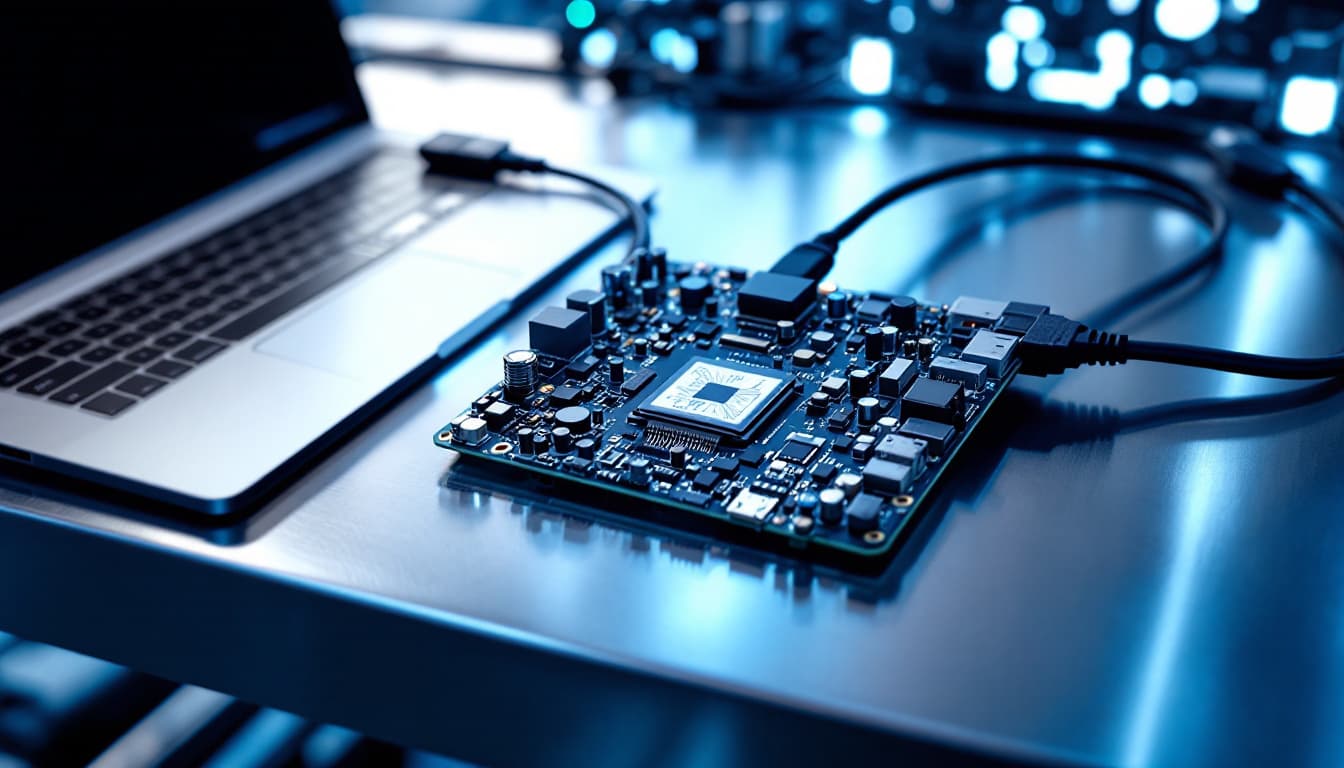
GM SPS2 PCM & ECM Module Programming (Keller TX)
Keller TX guide to GM SPS2 module programming — how PCM and ECM calibrations are VIN-matched, why a swapped module will not run, theft-deterrent relearn, cost and what a locksmith can and cannot do.
If you have replaced a powertrain control module on a Chevrolet, GMC, Buick, or Cadillac and the vehicle will not run, you have discovered the thing nobody mentions when they sell you the part: a GM PCM or ECM is not a bolt-on component. It arrives blank, and it has to be programmed to your VIN with your calibrations before it will do anything at all. Need a GM module programmed in the Keller area? Call or text (817) 968-3866.
Quick Answer
GM uses a system called SPS2 — Service Programming System 2 — to write factory calibrations into a replacement module. A new or reused PCM/ECM must be programmed against the vehicle's own VIN so the calibration set matches the engine, transmission, emissions configuration, and options. On top of that, the theft-deterrent system usually needs a relearn so the module and the immobilizer trust each other again. Programming labor in the Keller area typically runs $180–$400, separate from the module hardware.
Keller GM Module Programming Pricing
Ranges only, as of July 2026. Labor for the programming, not the module itself:
| GM module service | Typical range |
|---|---|
| PCM / ECM programming to VIN | $220–$400 |
| BCM programming and setup | $180–$340 |
| Theft-deterrent / immobilizer relearn | $120–$260 |
| Key relearn after module work | $90–$200 |
| Diagnosis before quoting | quoted on the call |
Module hardware is separate and varies enormously by platform. Get a quote against your VIN.
What SPS2 Actually Does
GM's service programming works differently from simply flashing a file. The system queries the vehicle, identifies the VIN, and then pulls the specific calibration set GM has released for that VIN — engine calibration, transmission calibration, and the various supporting files that make a module behave like the module that left the factory in your truck rather than the one in someone else's.
That VIN-matching is the whole point, and it is why three otherwise-identical Silverados can need three different calibration sets. Differences in axle ratio, emissions package, transmission, tire size, trailering equipment, and option content all land in the calibration.
It also explains the most common failure we get called about.
Why the salvage-yard module "doesn't work"
Someone buys a used PCM from a wrecked vehicle, bolts it in, and nothing happens — or the engine runs badly, throws codes, and refuses to shift correctly. The reason is that the module still carries the donor vehicle's VIN and calibrations. It is not broken. It is configured for a different truck.
Reprogramming a used GM module to a new VIN is sometimes possible and sometimes not, and this is where honest advice matters more than a sales pitch. Some GM modules accept a VIN change through the service programming path; others are effectively locked to the VIN they were first programmed with. Which category yours falls into depends on the module family and model year, and the honest answer for any specific case is that a technician confirms it against your VIN before promising anything. Anyone who guarantees a used-module reflash sight unseen is guessing.
A new service module, by contrast, ships blank and is designed to be programmed — which is why it is usually the cleaner path even at higher parts cost.
The Theft-Deterrent Layer
This is where module programming and locksmith work overlap, and it is the part most general shops handle least well.
GM vehicles pair the powertrain module and the body/immobilizer side of the vehicle so a stolen module or a stolen body computer cannot simply be swapped in. When a PCM or BCM is replaced, that relationship has to be re-established through a theft-deterrent relearn. Until it is, you get a vehicle that cranks and will not run, or starts and dies after two seconds, or a security light that stays on.
Older GM systems used VATS and PassLock — resistance-coded keys and body-computer-based key sensing. Later platforms moved to transponder-based systems with a relearn procedure that can include a timed wait, often around thirty minutes, sometimes repeated in cycles. That wait is deliberate anti-theft design. It cannot be skipped, and a competent technician schedules for it rather than being surprised.
If your issue is purely on the key side rather than the module side, our guide to Chevrolet and GMC key replacement and theft-deterrent relearn covers that path directly.
Symptoms That Point at Module Programming
- Cranks but will not run after a module swap — classic unprogrammed or unrelearned module.
- Starts and immediately dies — often the theft-deterrent relationship, not fuel or spark.
- Security light on with no key problem — immobilizer side needs attention.
- Runs but shifts badly after a PCM change — transmission calibration mismatch.
- Codes that will not clear no matter what you replace — a module configured for a different vehicle will keep reporting things that are not wrong.
- Multiple unrelated warning lights after a BCM replacement — a BCM carries option configuration, and an unconfigured one leaves half the vehicle confused. Our body control module programming guide goes deeper on that specific module.
What a Locksmith Can and Cannot Do Here
Worth being direct, because the boundary is real.
In scope for a properly equipped automotive locksmith: immobilizer and theft-deterrent programming, key and fob relearn, BCM key-related configuration, and module programming where our tooling and access cover that platform. This is the security layer, and it is the layer we specialize in.
Not a locksmith job: diagnosing a genuinely failed engine, a mechanical transmission problem, or wiring damage that is destroying modules. If your PCM failed because of a charging-system fault or a chafed harness, programming a new one just gives the fault a fresh victim. We will say so.
The honest grey area: whether a specific used module on a specific VIN can be reprogrammed. That is a per-case answer, and pretending otherwise is how people end up paying twice. Our guide to PCM and ECM replacement with VIN programming covers the general process, and the Chrysler and Dodge PCM programming and security gateway walkthrough shows how a different manufacturer gates the same work.
The Programming Process
- Diagnose first — confirm the module is the problem and not a symptom of something upstream.
- Verify ownership — photo ID plus registration, title, or matching insurance. Module and immobilizer work always requires this.
- Stabilize vehicle power — programming with a weak battery is how modules get bricked. A maintained supply is not optional.
- Read the VIN and pull the correct calibrations — the VIN-matched set, not a generic file.
- Write the calibrations — engine, transmission, and supporting files as the platform requires.
- Theft-deterrent relearn — re-establish the module-to-immobilizer relationship, including any timed wait.
- Key relearn if needed — keys may need re-registration after module work.
- Clear codes and verify — road-test behavior, confirm no returning faults.
Step three deserves emphasis. Voltage that sags during a flash can corrupt a module mid-write, and a half-written module is worse than the one you started with. This is the single most common way DIY programming attempts go badly.
Common GM Platforms We See
Around Keller the GM mix is heavy on trucks and full-size SUVs — Silverado and Sierra, Tahoe, Suburban, Yukon, Escalade — plus Equinox, Traverse, Acadia, Malibu, and Enclave. Module work turns up across all of them, and the pattern is consistent: someone replaced a part, the vehicle will not run, and nobody mentioned programming.
Older GM vehicles bring a second wrinkle. Twenty-year-old wiring, corroded grounds, and aging connectors make module faults more likely and make clean programming harder. On an older truck, checking grounds and battery condition before touching the module is not padding the job — it is the difference between a repair that holds and one that comes back.
Serving the Wider Metroplex
Module programming is specialist work, and demand for it stretches well past any one city. We handle GM PCM, ECM, and BCM programming for customers across Keller and the surrounding north Tarrant communities, and the same service reaches down through the mid-cities toward Arlington and across into the Denton County side. If you have been searching for PCM programming anywhere in the Metroplex and finding mostly dealerships, mobile service is a genuine alternative for the programming and security-relearn portion of the job.
Credentialed, Verified Access
Immobilizer and theft-deterrent programming touches vehicle security directly, so ownership verification comes first, without exception. The recognized framework for secure vehicle access in the United States is the National Automotive Service Task Force Vehicle Security Professional registry, through which qualified professionals reach protected functions the proper way. Locksmith licensing in Texas is administered by the Texas Department of Public Safety Private Security Program. No legitimate technician programs a module or an immobilizer without confirming the vehicle is yours.
Local Context for Keller GM Owners
Keller 76248 and the surrounding communities are truck country, and GM trucks are a large share of what we work on. The vehicles are typically well past warranty, which is exactly when module replacement becomes a real repair decision rather than a dealer line item. We program GM modules and handle theft-deterrent relearns on-site across Keller, Southlake, Colleyville, Watauga, North Richland Hills, Haslet, Argyle, and Justin. For the general primer, our overview of car computer module programming explains the category, and our transmission control module programming guide covers the TCM side.
Frequently Asked Questions
Does a replacement GM PCM have to be programmed?
Yes. A new service module ships blank and a used one carries the donor vehicle's configuration. Either way it must be programmed with the calibration set GM has released for your specific VIN before the vehicle will run correctly.
How much does PCM programming cost in the Keller area?
Programming labor typically runs $220 to $400 for a PCM or ECM, with theft-deterrent relearn at $120 to $260 and key relearn at $90 to $200 when needed. The module hardware is separate and varies widely by platform.
Can a used PCM from a salvage yard be reprogrammed to my VIN?
Sometimes, and sometimes not. Some GM module families accept a VIN change through the service programming path while others are effectively locked to the VIN they were first programmed with. It depends on the module family and model year, so a technician confirms it against your VIN before promising a result. Anyone guaranteeing it sight unseen is guessing.
Why does my truck crank but not run after replacing the module?
The two usual causes are that the module was never programmed to your VIN, or that the theft-deterrent relationship between the module and the immobilizer was never re-established. Both are programming problems, not parts problems.
How long does GM module programming take?
The write itself is often 30 to 60 minutes, but the theft-deterrent relearn can add a mandatory timed wait — commonly around thirty minutes and sometimes repeated in cycles. Plan on a scheduled appointment rather than a quick stop.
Do I need proof of ownership for module programming?
Yes. Immobilizer and theft-deterrent work always requires a photo ID plus registration, title, or matching insurance. It is standard practice and it protects you.
Get Your GM Module Programmed
If you have a new or used PCM, ECM, or BCM sitting in a vehicle that will not run, the missing step is almost always programming and the theft-deterrent relearn. Keller Locksmith handles GM module programming across Keller, Southlake, Colleyville, Watauga, North Richland Hills, and the surrounding Tarrant and Denton County areas. Call or text (817) 968-3866 with your year, model, and which module you are dealing with.
Written by the Keller Locksmith Automotive Locksmith Team — mobile GM PCM, ECM, and BCM programming with theft-deterrent relearn across Keller and north Tarrant County.
Need a locksmith now?
Licensed mobile automotive locksmith serving the area. 30-90 minute response.
Call (817) 968-3866