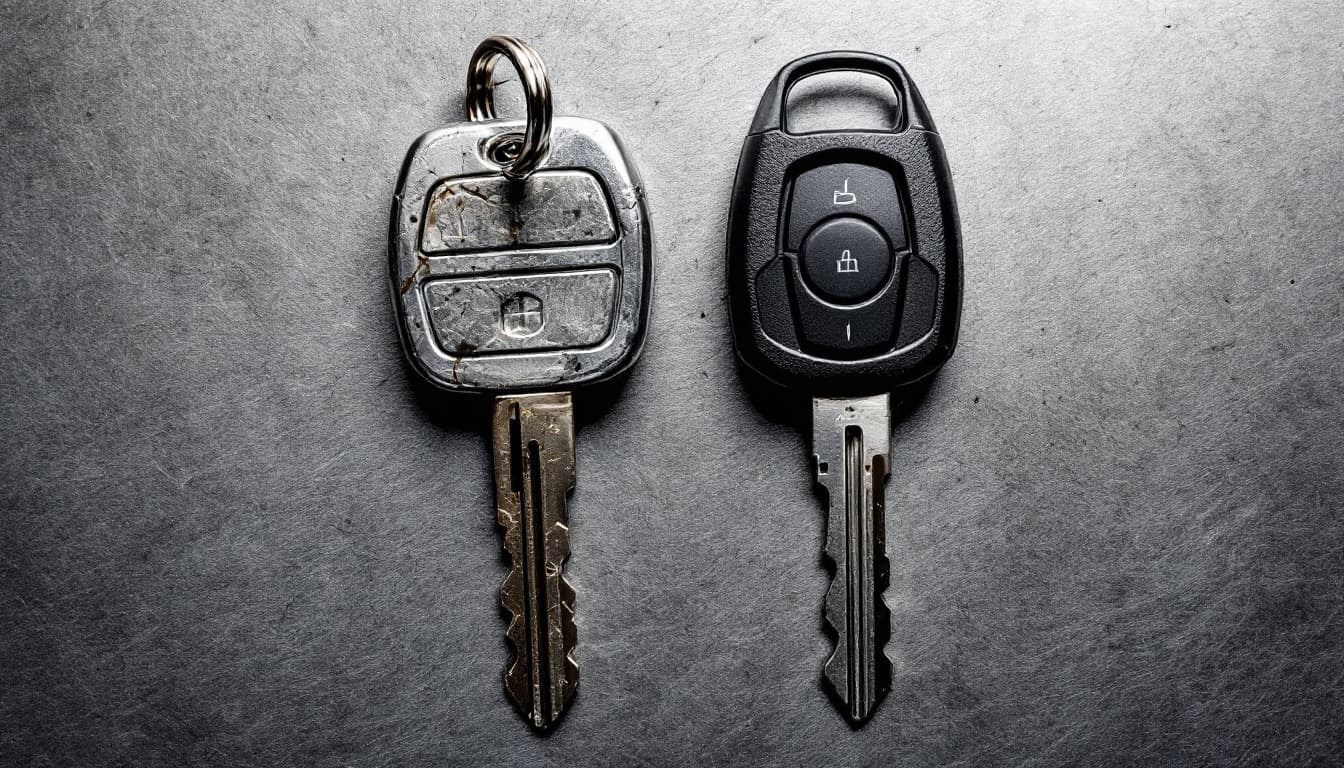
Worn Car Key That Will Not Turn the Ignition (Keller TX)
A Keller TX automotive locksmith explains why a worn car key stops turning the ignition — worn cuts, worn cylinder, wiggling to start — and the fix before it fails.
If you have started wiggling and jiggling your key to get the car to turn over, your key is telling you it is worn out — and it will eventually stop working entirely, usually at the worst moment. Catching it early is cheap and easy. If your key is getting hard to turn around Keller, call or text (817) 968-3866 before it strands you.
Quick Answer
A car key that will not turn the ignition is usually caused by a worn key, a worn ignition cylinder, or both. Years of use round off the key's cuts and wear the cylinder's wafers until the two no longer line up cleanly. The fix is often as simple as cutting a fresh key to factory specs, which restores crisp cuts and reliable turning. On the Keller area, a new cut key (and programming if it is a chip key) commonly runs $120–$300+. Do not wait until it fails completely.
Why Keys Wear Out
A key is a precision tool, and every use wears it a little:
- Rounded cuts — the sharp peaks and valleys that align the wafers slowly round off, so the key no longer sets the pins cleanly.
- A worn cylinder — the ignition's internal wafers and springs wear too, and a worn cylinder plus a worn key is a bad combination.
- A well-used original vs. a copy of a copy — every duplicate made from a duplicate loses a little accuracy, so a key that is a copy of a copy wears out faster.
- Bending and stress — a heavy keychain and daily turning gradually bend and fatigue the blade.
The wiggle-to-start habit is the classic warning sign: the key needs to be jiggled into just the right spot because its worn cuts barely align the wafers anymore.
The Danger of Ignoring It
A worn key does not fail gracefully. The progression is predictable:
- The key gets a little hard to turn.
- You start wiggling it to find the sweet spot.
- One day it will not turn at all.
- Force is applied, and the key snaps off in the ignition.
That last step turns a simple new-key job into a broken-key extraction and possibly a cylinder replacement. Cutting a fresh key while the old one still works is dramatically cheaper.
The Fix: A Freshly Cut Key
The best solution is usually a new key cut to the vehicle's original factory specifications rather than copied from the worn key. Cutting to code — from the vehicle's key code rather than tracing your worn blade — restores the crisp, accurate cuts that turn the cylinder cleanly. Copying a worn key just reproduces the wear.
For a chip or smart key, the new key is also programmed to the immobilizer so it starts the car.
When the Cylinder Is Also Worn
Sometimes a fresh key alone does not fully fix it because the ignition cylinder itself is worn or binding. Signs the cylinder is involved:
- Even a brand-new key is stiff or catchy
- The cylinder feels gritty or sticks at certain points
- The problem showed up gradually across multiple keys
In that case the cylinder may need cleaning, servicing, or replacement. A locksmith can diagnose whether it is the key, the cylinder, or both.
The Process
- Diagnose — determine whether the key, the cylinder, or both are worn.
- Verify ownership — photo ID plus proof the vehicle is yours.
- Cut a fresh key to code — restoring accurate cuts.
- Program if chipped — so a transponder or smart key starts the car.
- Service the cylinder if needed — clean, repair, or replace.
- Confirm smooth operation — verify the key inserts, turns, and starts cleanly.
What It Costs
| Service | Typical range |
|---|---|
| Fresh key cut to code (non-chip) | $80–$180 |
| Chip key cut to code and programmed | $140–$300+ |
| Ignition cylinder service or replacement | Quoted after inspection |
Ranges, not quotes. The vehicle, key type, and whether the cylinder needs work drive the price. A fresh key while the old one still works is the least expensive path.
Preventing the Next Worn-Key Problem
- Cut a fresh key at the first sign of wiggling, not after it fails.
- Have new keys cut to code rather than copied from a worn key.
- Keep the keyway clean and avoid an overloaded keychain.
- Keep a good spare so no single key is worn down by carrying the whole load.
Locksmith vs. Dealer
- Mobile automotive locksmith — cuts a fresh key to code and programs it on-site, services the cylinder if needed, no tow.
- Dealer — an option, but typically pricier and requires an appointment.
For a worn key, a mobile locksmith is almost always the faster, cheaper solution.
Legitimate, Credentialed Access
If the fresh key is a chip or smart key, programming touches the immobilizer, a secured system. The recognized industry framework for responsibly accessing it is the National Automotive Service Task Force (NASTF) Vehicle Security Professional registry. A legitimate locksmith checks proof of ownership before cutting and programming a key.
Local Context for Keller Drivers
The wiggle-to-start key is one of those problems Keller drivers live with far too long — until the morning it will not turn at all. A mobile locksmith comes to you across Keller, Southlake, Colleyville, Watauga, North Richland Hills, Haslet, Argyle, and Justin, cuts a fresh accurate key, and checks the cylinder. The moment you find yourself jiggling the key, that is the cheap window to fix it.
Frequently Asked Questions
Why won't my car key turn the ignition anymore?
Usually because the key's cuts have worn round, the ignition cylinder's wafers have worn, or both, so they no longer align cleanly. The wiggle-to-start habit is the warning sign. A fresh key cut to factory code often restores clean turning, though a worn cylinder may also need service.
Why does it help to have a key cut to code instead of copied?
Because copying your worn key just reproduces the wear. Cutting to code uses the vehicle's original key specifications to restore crisp, accurate cuts that set the wafers cleanly. A copy of a worn blade will be nearly as unreliable as the key you are replacing.
Is a key that needs wiggling going to break?
Very likely, eventually. A worn key that needs jiggling barely aligns the wafers, and one day it will not turn at all — at which point force tends to snap it off in the cylinder. Cutting a fresh key while the old one still works avoids that break and the costlier extraction.
Could the problem be the ignition, not the key?
Yes. If even a new key is stiff or catchy, or the cylinder feels gritty and sticks, the ignition cylinder is likely worn or binding. A locksmith can diagnose whether it is the key, the cylinder, or both, and service the cylinder if needed.
How much does a fresh cut key cost?
A non-chip key cut to code commonly runs $80 to $180, and a chip key cut to code and programmed $140 to $300 or more. If the cylinder needs service or replacement, that is quoted after inspection. Cutting a fresh key while the old one still works is the cheapest outcome.
Do I need proof of ownership?
Yes, especially for a chip or smart key, because programming touches the immobilizer. A legitimate locksmith checks a photo ID plus registration, title, or matching insurance before cutting and programming a key.
Fix the Worn Key Before It Fails
From a wiggle-to-start key to a stiff ignition, Keller Locksmith cuts fresh keys to code and services ignitions on-site across Keller and north Tarrant County. Call or text (817) 968-3866 with your year, make, and model.
Written by the Keller Locksmith Automotive Locksmith Team — mobile key cutting, programming, and ignition service across Keller and north Tarrant County.
Need a locksmith now?
Licensed mobile automotive locksmith serving the area. 30-90 minute response.
Call (817) 968-3866