Told You Need a New Immobilizer After Losing Your Keys? How to Check First — Keller TX
A shop quoted you a new immobilizer, ECU or body module because you lost every key. Sometimes that is correct and often it is premature. How to tell the difference, what to ask, and what each outcome costs in Keller TX.
Told You Need a New Immobilizer After Losing Your Keys? How to Check First — Keller TX
Losing every key is expensive enough. Being told the computer has to be replaced on top of it is the moment most people call for a second opinion, and they are usually right to. Call or text (817) 968-3866 with your VIN before you authorize module work.
Quick Answer
Replacing an immobilizer, ECU or body module for an all-keys-lost job is occasionally necessary and frequently premature. The three things to establish first are whether anyone has actually attempted programming, whether the module has a fault code or is simply refusing an unauthorized tool, and whether your platform has a documented all-keys-lost path. All keys lost normally runs $250 to $650 or more. Module replacement with programming starts around $150 to $600 on top of parts.
Why This Recommendation Happens
Start by assuming good faith, because most of the time it is warranted. There are real vehicles where losing every key genuinely does require module work, and a shop that tells you so is doing its job.
But there are three other reasons the same sentence gets said, and none of them mean your module is bad.
The shop does not have the coverage. An all-keys-lost job on a gated platform needs a specific tool, a maintained authorization credential, and often an online round-trip to the manufacturer. A general repair shop or a tire-and-brake chain may have none of that. When the tool cannot complete the procedure, the honest report is "we cannot do this" — but what frequently gets written on the estimate is "the immobilizer is not responding," which reads to a customer as a failed part.
The security wait was mistaken for a failure. Several manufacturers enforce a mandatory anti-theft hold during all-keys-lost programming — ten, sixteen, thirty, occasionally sixty minutes where the tool sits and nothing happens. If nobody knew that timer was normal, a dead screen for half an hour looks exactly like a dead module.
Replacement is simply the path of least resistance. Swapping a module and programming it is a well-understood job with a predictable invoice. Diagnosing whether it needed swapping is slower and pays less. That is not fraud; it is the incentive structure, and it is why a second opinion is worth a phone call.
Four Questions to Ask Before You Authorize Anything
You do not need to be technical to ask these, and the answers tell you almost everything.
1. "Was programming actually attempted, and what did the tool report?"
There is a large difference between "we attempted the procedure and the module returned a communication fault" and "our tool does not cover this vehicle." Both may be described as the immobilizer not working. Ask which one it was. Ask for the exact message.
2. "Is there a stored fault code for the module, and what is it?"
A genuinely failed module usually leaves evidence — a communication fault, an internal memory error, a code from other modules reporting that it has gone silent on the network. A module that is merely refusing an unauthorized request does not throw a fault, because nothing is wrong with it. If there is no code, ask what the failure is based on.
3. "Does this vehicle have a documented all-keys-lost procedure?"
On most mainstream vehicles the answer is yes, and a properly equipped locksmith runs it routinely. On a small number of platforms — certain European vehicles, certain first-year models — the answer is genuinely no, or only through a dealer. That is a real answer and we will give it to you when it applies.
4. "Did the car run before the keys were lost?"
This is the one people skip, and it is close to decisive. If the vehicle started and drove normally last week and the only thing that changed is that the keys went missing, the probability that the immobilizer spontaneously failed in the same window is low. Modules do fail, but they rarely fail on exactly the day you lose your keys.
What the Symptoms Actually Point To
Work through these honestly, because they separate the real cases from the premature ones.
Pointing toward: the module is fine, it needs programming
- The vehicle started and drove normally right up until the keys were lost.
- No warning lights were present before this.
- The shop describes a tool limitation, a coverage issue, or a procedure that "timed out."
- There are no stored communication faults.
- The vehicle powers up, the dash lights behave normally, and it cranks or attempts to start.
This is the large majority of cases we are called about. What the vehicle needs is an all-keys-lost programming session, not a part.
Pointing toward: the module genuinely needs work
- The vehicle had immobilizer or electrical symptoms before the keys went missing — intermittent no-starts, a security light behaving oddly, dash warnings that came and went.
- There are stored communication faults, or other modules report the immobilizer missing from the network.
- The vehicle has had water intrusion, a collision, a jump-start done backwards, or a recent battery or alternator event.
- A properly equipped locksmith has attempted the documented procedure and it failed at the module rather than at the tool.
- The vehicle was stolen or the ignition was physically attacked.
That last one matters in this area. A punched or forced ignition frequently does take modules with it, and in that case replacement is not a shortcut — it is the repair.
What Each Outcome Costs
| Outcome | Typical range |
|---|---|
| All keys lost, programming only, no module work | $250 – $650+ |
| Key or immobilizer programming, general band | $75 – $400+ |
| Immobilizer or key-system diagnosis | $60 – $150, applied to the repair |
| Immobilizer marriage after an ECM or PCM swap | $150 – $450 |
| Security-module flash and VIN configuration | $150 – $600+ |
| BCM configuration tied to keys and locks | $150 – $500+ |
| Used-module reconfiguration from a donor VIN to yours | $200 – $600+ |
| Mobile service call to your location | $45 – $95 |
| After-hours surcharge | ~$100, quoted up front |
| Module parts | Quoted from your VIN — varies widely |
The number worth staring at is the top row against the two below it. If your vehicle only needs an all-keys-lost session, you are comparing a single line item to a line item plus a part plus programming plus labor. That is the gap a second opinion is protecting.
The Diagnostic Sequence That Settles It
This is what we actually do when someone calls after a module quote.
Step one is the VIN, on the phone, before anyone drives anywhere. The VIN tells us the platform, the immobilizer architecture, whether an all-keys-lost path exists, and whether a security hold applies. That conversation is free and it resolves a meaningful share of these calls outright — sometimes the answer genuinely is that the vehicle is dealer-only, and we say so.
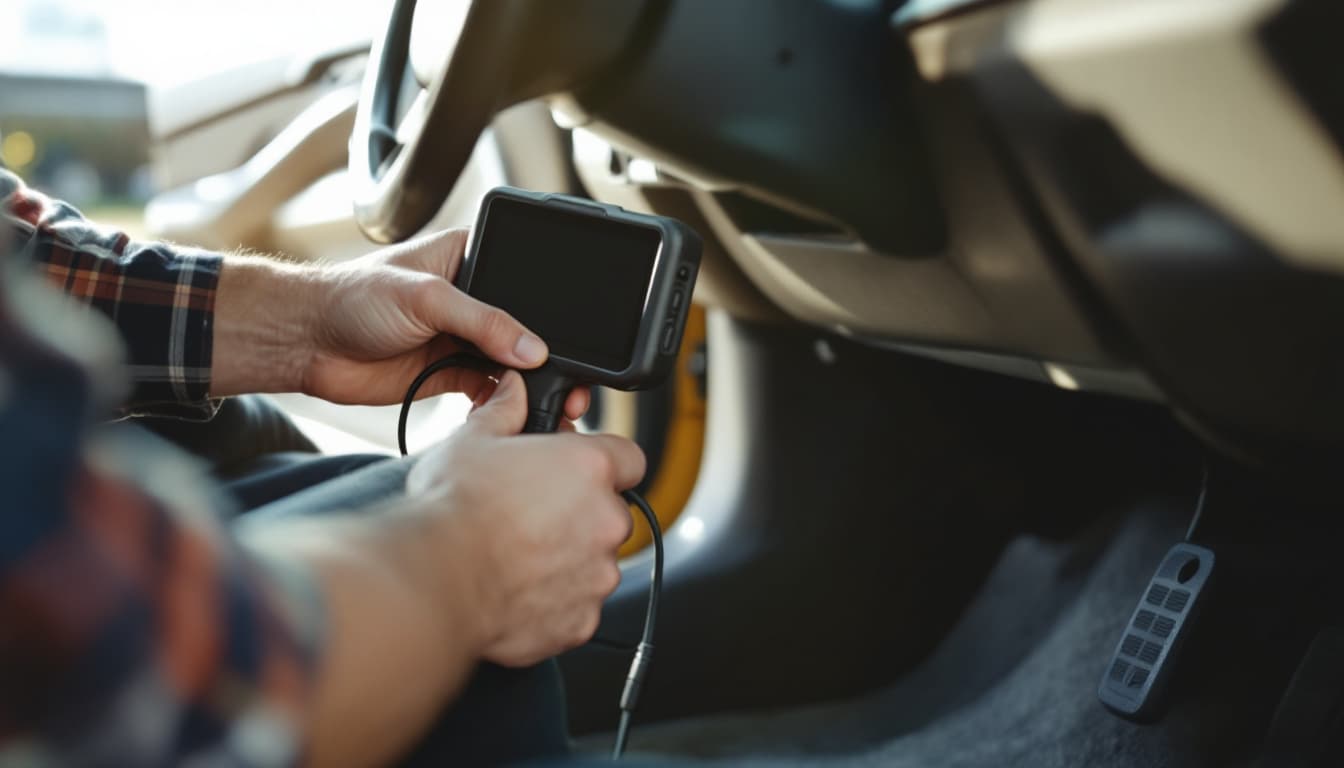
Step two is a scan at the vehicle. We read every module on the network, not just the one under suspicion, because an immobilizer that appears dead is sometimes a healthy module behind a failed gateway, a chafed wire, or a fuse. Diagnosis is $60 to $150 and comes off the repair if you proceed.
Step three is to attempt the documented procedure. With the right tool and a valid credential, the module either accepts the session or it does not. If it accepts, you needed programming and the quote you were given was premature. If it refuses with a genuine fault, you have a confirmed answer rather than an assumption — and now module replacement is the correct repair rather than a guess.
We check voltage before any of this, and put a maintainer on the battery. A module write that fails halfway because the 12-volt sagged can damage a module that was healthy when the session started, which is the one way a premature diagnosis becomes a self-fulfilling one.
What Happens If the Module Really Does Need Replacing
It is not a catastrophe, and it is worth knowing the shape of it so the quote makes sense.
A replacement module arrives blank or carrying a donor vehicle's identity. It has to be configured to your VIN, then married to the immobilizer so it recognizes keys, and then keys have to be programmed to it. That is why module work is quoted as a part plus programming — the part alone does nothing.
Used and remanufactured modules are often viable and can cut the parts cost substantially, with the caveat that some platforms lock a module to its first VIN and will not release it. Reconfiguring a donor module runs $200 to $600 or more, and whether yours is a candidate depends on the platform. Our PCM and ECM replacement with VIN programming walkthrough covers that process, and the car module programming cost breakdown has the full pricing picture.
European vehicles deserve a specific mention, because they generate the most module-replacement quotes. On those platforms the immobilizer is often bound to the ignition switch assembly, and losing all keys is legitimately more involved. The Mercedes-Benz key replacement guide explains why those quotes look the way they do, and it is one of the cases where the shop telling you this is expensive is simply being accurate.
What This Looks Like When It Goes Right
The most common version of this call around Keller: someone lost the only key to a mainstream SUV, took it to a general shop, and left with an estimate containing a module, programming and several hours of labor. The vehicle had no symptoms before the keys went missing and no stored codes.
We ran the VIN on the phone, confirmed a documented all-keys-lost path existed, went out to the vehicle, and programmed keys in a driveway. No part. The job was the top row of the table, not the top row plus a module.
That is not a story about a dishonest shop. It is a story about coverage. The shop could not do the procedure, and the estimate reflected the only route it had available.
Frequently Asked Questions
Does losing all my keys damage the immobilizer?
No. Losing keys is an inventory problem, not an electrical one. The vehicle's authorized key list is simply empty of anything you physically possess. Nothing about that harms the module.
Can a locksmith program keys without replacing the module?
On the large majority of vehicles, yes — that is the normal all-keys-lost procedure, and it costs $250 to $650 or more depending on platform and key type. Module replacement is only required when the module has genuinely failed.
How can I tell if the module is actually bad?
The strongest evidence is symptoms that existed before the keys were lost, plus stored communication faults, plus a failed attempt at the documented procedure by someone with proper coverage. Absent all three, the recommendation is worth a second opinion.
Why did the shop say the immobilizer is not responding?
Sometimes because it genuinely is not. Often because their tool has no coverage or no authorization for your platform, and the tool reported a failure that reads like a module fault. Ask which one it was and what the exact message said.
Is a used or remanufactured module safe to use?
Frequently yes, and it can cut the parts cost significantly. The limitation is that some platforms permanently lock a module to the first VIN it is paired with. Reconfiguring a donor module runs $200 to $600 or more, and whether yours qualifies depends on the platform.
What does a second opinion cost me?
The phone call and the VIN are free, and that alone settles a good share of these. If we go to the vehicle, diagnosis is $60 to $150 and it applies to the repair if you go ahead with us.
What if the dealer is genuinely the right answer?
Then we will tell you that, and we would rather do it on the phone than after a service call. Some platforms and some first-year models have no independent path yet. Knowing that in two minutes is worth more than a wasted trip.
Get a Second Opinion Before You Authorize the Part
A VIN and five minutes is usually all it takes to know whether you are looking at a programming job or a repair. Call or text (817) 968-3866 with your year, make, model, VIN and what the other shop told you. If the module really does need replacing, we will confirm it — and if it does not, you will have saved the difference. Mobile service across Keller, Southlake, Colleyville, Watauga, Haslet, Argyle, Justin and North Richland Hills.
Written by the Keller Locksmith automotive team, who run all-keys-lost and immobilizer diagnosis across Tarrant and Denton County every week.
Need a locksmith now?
Licensed mobile automotive locksmith serving the area. 30-90 minute response.
Call (817) 968-3866