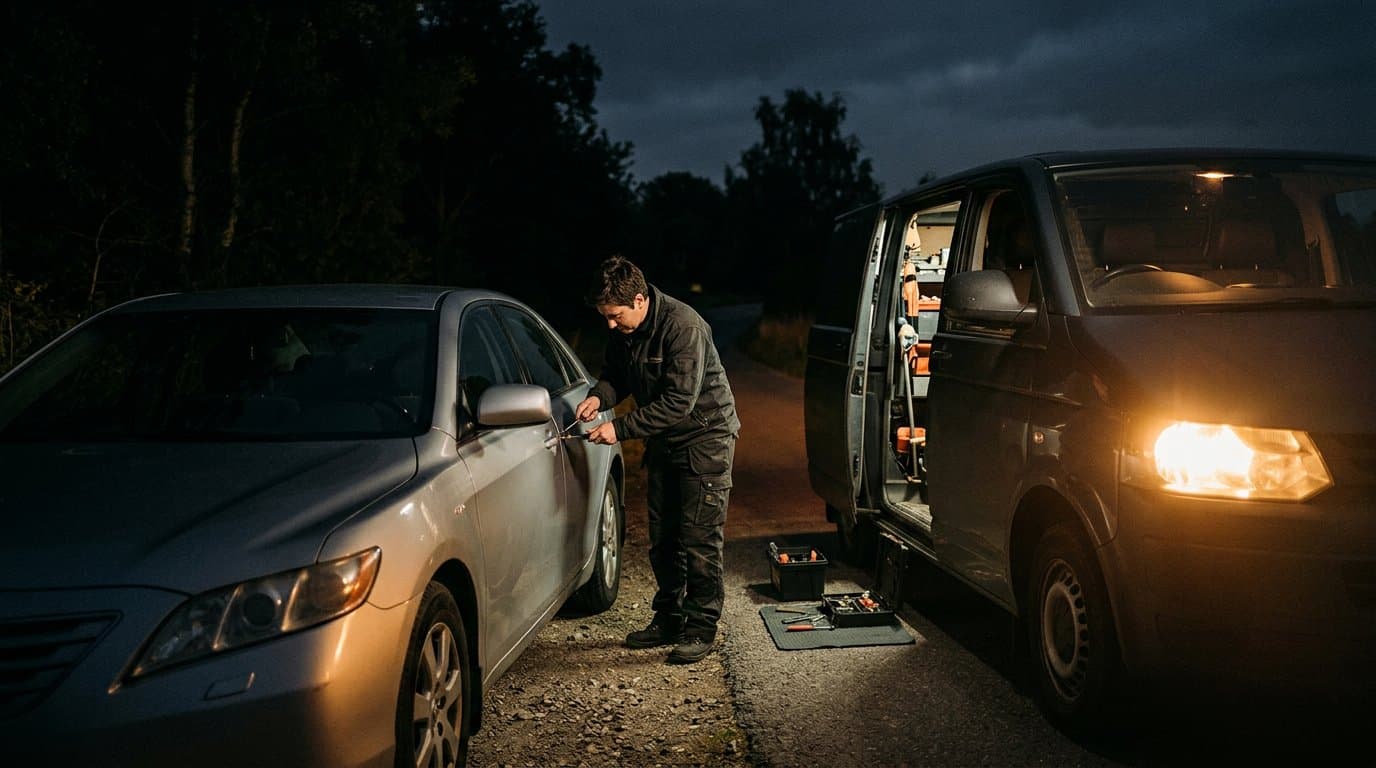
Car Says Wrong Key Even Though It's the Original
When your car says wrong key even though it's the original, the issue is usually a failed signal between the transponder chip and immobilizer system, not the…
Car Says Wrong Key Even Though It's the Original — Keller TX
When your dashboard reads "wrong key" or "key not detected" and you are holding the only key your car has ever known, the problem is almost always a failure in communication between the key's transponder chip and the car's immobilizer system—not proof that someone handed you the wrong key. The error means the receiver module in your vehicle cannot authenticate the signal from your key, even though the metal cut is correct and the electronics inside the key have not changed. Call or text (817) 968-3866 for mobile diagnostic and programming service in Keller, Southlake, Colleyville, Watauga, and North Richland Hills—no tow required.
This guide explains why an original key suddenly stops working, what you can try at home before paying for service, and how to decide between repairing the key, reprogramming the car, or replacing hardware.
What 'Wrong Key' Actually Means When You Have the Original Key
A "wrong key" error does not mean the key is physically incorrect. Modern vehicles use a two-part authentication process: the metal blade must match the lock cylinder, and the embedded transponder chip must send a radio-frequency code that the engine control unit recognizes. If the chip signal fails, the immobilizer blocks fuel or ignition, and the dashboard displays "key not detected," "service theft deterrent system," or a similar warning.
The error message is the car's way of saying "I see a key in the ignition, but I cannot confirm it is authorized." That happens when the transponder chip loses power, when the antenna coil around the ignition stops receiving the signal, or when the immobilizer memory becomes corrupted. In every case, the original key still fits the lock perfectly—it just cannot prove its identity electronically.
Why Your Car Suddenly Stops Recognizing Its Own Key
Three hardware failures and two software issues account for most "wrong key" errors with original keys.
Dead or Damaged Transponder Chip
Transponder chips are passive—they draw power from the car's antenna coil when you insert the key. Physical damage to the chip, a cracked key head, or corrosion on the internal antenna can prevent the chip from energizing. If the chip never wakes up, the car sees no signal at all.
Worn or Misaligned Ignition Antenna Coil
The plastic ring around your ignition cylinder houses a small antenna that powers and reads the transponder. If that coil cracks, shifts out of position, or accumulates metal shavings from a worn car key that will not turn the ignition, it cannot communicate with the chip even when the key is fully inserted.
Low or Unstable Vehicle Battery Voltage
The immobilizer and body-control modules require stable voltage to read and authenticate keys. A battery with corroded terminals, a failing alternator, or a parasitic drain can cause intermittent "wrong key" errors that disappear when you jump-start the vehicle.
Corrupted Immobilizer Memory
After a dead battery, jump-start, or electrical fault, some vehicles lose their stored key data. The physical key is correct, but the engine control unit no longer recognizes the transponder ID in its database. This is especially common in older General Motors, Chrysler, and Nissan models.
Failed Key-Fob Battery in Proximity Systems
Push-button and proximity-key vehicles still require battery power inside the fob to transmit the authentication signal. A dying battery can produce weak or intermittent communication, triggering a "key not detected" warning even when the fob is inside the car.
What to Try Before Calling a Locksmith or Dealership
If your dashboard says "wrong key" and you know the key is original, these steps can isolate the cause and sometimes restore function without professional service.
Check the Key-Fob Battery
If your vehicle has a push-button start, replace the coin-cell battery in the fob. Most designs use CR2032, CR2025, or CR2450 cells, which you can buy at any pharmacy. A fresh battery often resolves "key not detected" errors immediately. Test the fob by pressing lock or unlock from ten feet away—if the range is shorter than usual, the battery is likely weak.
Inspect the Key Head for Cracks or Damage
Hold the key under strong light and look for cracks in the plastic head, especially near the blade. A split key head can sever the connection between the chip and its internal antenna. If you see visible damage, the chip may still work if you hold the key very still, but replacement is the only durable fix.
Clean the Battery Terminals
Pop the hood and inspect both battery posts. White or green corrosion disrupts voltage to the immobilizer system. Remove the cables, scrub the terminals with a wire brush and baking soda, rinse with water, dry thoroughly, and reconnect. Clear any stored trouble codes by disconnecting the negative cable for thirty seconds.
Try the Spare Key
If you have a spare car key, test it in the same ignition. If the spare works, the problem is inside the original key itself—either a damaged chip or a failed fob battery. If both keys fail, the fault lies in the car's receiver or immobilizer module.
Reposition the Key in the Ignition
Some ignition cylinders develop internal wear that prevents the key from seating fully. Wiggle the key gently while turning, pull it out one millimeter, or rotate the steering wheel slightly to relieve pressure on the lock. If the car starts with the key held at an unusual angle, the ignition cylinder or antenna coil is likely worn.
When the Problem Is the Key Itself Versus the Car's Receiver
Determining whether the fault is in the key or the vehicle dictates whether you need key replacement, module programming, or ignition repair—and that distinction saves you from paying for the wrong service.
| Symptom | Likely Fault |
|---|---|
| Spare key works; original does not | Damaged transponder chip or dead fob battery in the original key |
| Both keys fail; battery and terminals are clean | Antenna coil, immobilizer module, or corrupted key memory in the vehicle |
| Error appears only after jump-start or dead battery | Immobilizer memory loss; relearn procedure required |
| Intermittent error that resolves with key wiggling | Worn ignition cylinder or loose antenna coil |
| "Key not detected" with push-button start; fob buttons still work | Weak fob battery or failed receiver antenna in the vehicle |
If both keys fail and the battery is healthy, the car's immobilizer system needs professional diagnostic equipment. A mobile locksmith in Keller can connect a scan tool to read trouble codes from the body-control module, identify whether the receiver sees any transponder signal at all, and perform a relearn procedure if the key data was erased. Call or text (817) 968-3866 for on-site diagnosis—we bring the tools to your location so you never need a tow.
Repair or Replace: Which Path Makes Sense for Your Situation
Once you know where the fault lies, you face a choice: repair the existing hardware, replace the key, or reprogram the vehicle's immobilizer.
Key Replacement
If the transponder chip inside your key is damaged or the plastic head is cracked, a new key is the permanent fix. A mobile automotive locksmith can cut a new blade to match your lock cylinders and program the transponder to your vehicle's immobilizer. This is a complete solution when the car's receiver is healthy but the key itself has failed. Most transponder-key replacements for common domestic and Asian vehicles take thirty to sixty minutes on-site.
Immobilizer Relearn or Reset
If the car lost its key memory after a battery event, a relearn procedure restores the link between the engine control unit and your existing keys. This is not a replacement—it is a software update. General Motors calls this a "theft-deterrent relearn," Chrysler calls it a "security reset," and Ford calls it a "PATS initialization." The procedure varies by make and model, but it usually requires a scan tool, the vehicle identification number, and proof of ownership. Some domestic vehicles allow a manual relearn using a specific sequence of ignition cycles, but most require professional equipment.
Ignition or Antenna-Coil Replacement
If the antenna coil around the ignition is cracked or corroded, neither repair nor key replacement will fix the problem. The coil must be replaced, and the immobilizer may need to relearn the keys afterward. This is a mechanical repair, not a locksmith-only job—it may require disassembly of the steering column. A mobile locksmith can diagnose the coil and, in many cases, source and install the part on-site, but some vehicles require dealership-level tooling.
Your decision should balance the age of the vehicle, the cost of each option, and whether you already need a spare key for other reasons. If your original key is ten years old and the spare is already worn, replacing both keys and programming them together often costs less than replacing one now and another later.
Frequently Asked Questions About 'Wrong Key' Errors with Original Keys
Can a dead car battery erase my key programming?
Not in most modern vehicles. The immobilizer memory is stored in non-volatile flash memory that survives battery disconnection. However, a severely discharged battery can corrupt the memory during voltage sag, and some older General Motors and Chrysler vehicles will clear key data if the battery voltage falls below a critical threshold during cranking.
Will a locksmith charge me if they diagnose the problem but cannot fix it on-site?
Policies vary by company, but most mobile locksmiths in Keller charge a service-call or diagnostic fee that applies toward the repair if you proceed. Texas locksmith companies and technicians must follow state licensing and vehicle-ownership verification requirements. Reputable automotive locksmiths should be able to show business identification, insurance, and proof of authorization before performing vehicle key work. Always ask about diagnostic charges before the technician arrives.
Why does the error go away when I wiggle the key?
Wiggling changes the position of the transponder chip relative to the antenna coil. If the coil is cracked, misaligned, or partially detached, moving the key a few millimeters can restore signal contact. This symptom almost always means the ignition antenna or cylinder needs replacement—the error will return and worsen over time.
Can I program a new key myself if the original is damaged?
A few domestic makes—Ford, Lincoln, and some GM models—allow you to program an additional key if you already have two working originals. You cannot program a first key or recover from a "wrong key" error using the self-programming procedure. For most vehicles, adding or replacing a key when none are recognized requires professional scan-tool access and proof of ownership.
Is it worth fixing a 'wrong key' error on a fifteen-year-old car?
If the vehicle is otherwise reliable and the repair cost is less than three months of car payments on a replacement, fixing the immobilizer or key usually makes financial sense. A transponder-key replacement or relearn procedure is far cheaper than buying a different vehicle. If the immobilizer module itself has failed—uncommon but possible in high-mileage domestic trucks—you may face a choice between module replacement and retiring the vehicle, depending on its overall condition.
Get Help When Your Car Won't Accept Its Own Key
A "wrong key" error with your original key is frustrating, but it is a solvable electrical fault, not a mystery. Most cases trace to a weak fob battery, a damaged transponder chip, a worn ignition antenna, or a corrupted immobilizer memory after a battery event. Trying a spare key, replacing the fob battery, and cleaning the battery terminals will isolate many problems without professional help, but persistent errors need scan-tool diagnosis and programming equipment.
Mobile locksmith service is often faster and more convenient than the dealership because we come to your location, help avoid towing, and can complete many key replacements the same day. We serve Keller, Southlake, Colleyville, Watauga, North Richland Hills, and surrounding north Tarrant County communities with transparent pricing and ownership verification before any work begins.
Call or text (817) 968-3866 for on-site diagnostic and programming service—available around the clock, every day of the year. If your car says "wrong key" even though you are holding the only key it has ever known, we will bring the tools and expertise to your driveway, office, or roadside and restore your ignition without a tow.
Related reading
- Spare Car Key: Why Cut a Second Key Before You Lose the First (Keller TX)
- Valet Key Replacement — What It Is and Why You Want One (Keller TX)
- Keller Auto Locksmith: 9 Questions Customers Actually Ask (2026)
- Car Key Replacement Guide 2025
- Auto Locksmith vs Dealership for Car Key Replacement in Keller TX
Need a locksmith now?
Licensed mobile automotive locksmith serving the area. 30-90 minute response.
Call (817) 968-3866