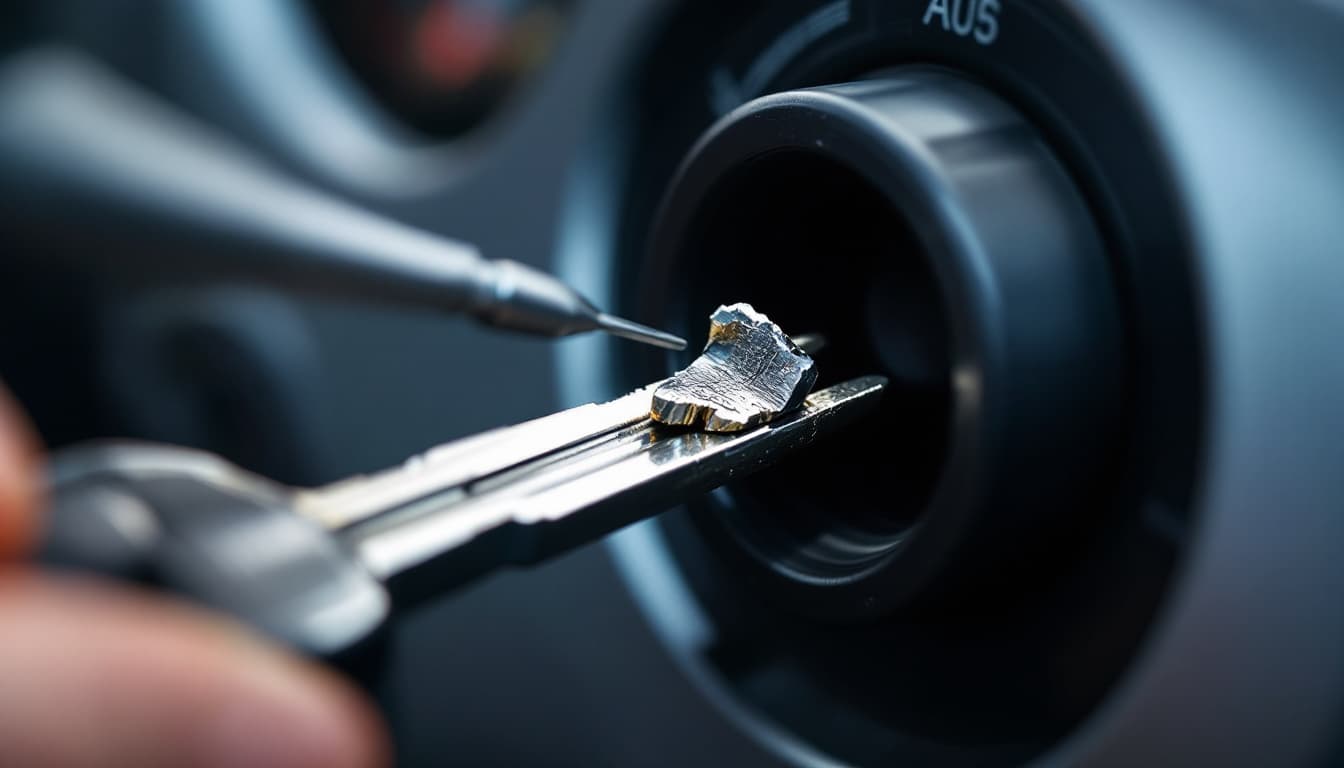
Key Broke Off in the Ignition? Extraction in Keller TX, $85-$185
Key snapped in the ignition or a door lock? Extraction in Keller TX runs $85 to $185. Why keys break, why glue and pliers make it worse, and how it is removed.
A key that snaps off in the ignition or a door lock feels like a disaster, but for a locksmith it is routine — as long as you resist the urge to dig it out yourself. The wrong tool can push the broken piece deeper and turn a simple extraction into a cylinder replacement. If a key broke off in your car around Keller, call or text (817) 968-3866 before you make it worse.
Quick Answer
A broken key can almost always be extracted from an ignition or door lock without damaging the cylinder when the right extractor tools are used. A mobile locksmith removes the broken piece and then cuts (and programs, if it is a chip key) a replacement. In the Keller area, broken-key extraction runs $85–$185 as of October 2026, plus the cost of a replacement key, which is almost always needed. The full price table, including what a damaged cylinder adds, is in our broken car key extraction cost guide. Do not try to dig it out with a screwdriver or glue — that is what turns a cheap job into an expensive one.
Why Keys Break Off
Keys snap for predictable reasons, and knowing the cause helps prevent a repeat:
- Metal fatigue — years of turning wear and weaken the blade until it finally cracks.
- Worn keys and worn cylinders — a rounded key in a worn lock needs extra force, and force plus a weak key equals a break.
- A stiff or seized lock — a lock that binds makes you crank harder, stressing the key.
- Cheap or thin duplicate keys — a poorly cut or low-quality copy is weaker than the original.
- Turning with the wrong angle or a jammed steering lock — twisting a bound cylinder can shear the blade.
If your key was getting hard to turn, that was the warning sign — a break was coming.
Why You Should Not DIY the Extraction
It is tempting to grab pliers, a screwdriver, or superglue, but each of these commonly backfires:
- Screwdrivers and picks push the broken piece deeper and can scratch or bend the wafers inside the cylinder.
- Superglue is the classic mistake — it bonds the broken piece to a tool or to the cylinder and often destroys the lock entirely.
- Pliers rarely reach a piece that is flush or recessed, and grabbing at it can jam it tighter.
A broken key that could have been extracted in ten minutes becomes a full cylinder replacement once someone forces it. The safest, cheapest move is to stop and call.
How a Locksmith Extracts a Broken Key
- Assess the lock — determine how deep the piece is and whether the cylinder is intact.
- Use proper extractor tools — thin, hooked extractors designed to grip and slide the broken blade out along the keyway without harming the wafers.
- Remove the piece cleanly — often in minutes when the cylinder has not been damaged by prior attempts.
- Assess the key — decide whether the broken key can be reassembled and copied or whether a fresh key is needed.
- Cut and program a replacement — for a transponder or smart key, program it to the immobilizer so it starts the car.
- Check the lock — confirm the cylinder still turns smoothly, and address any binding that caused the break.
What It Costs
| Service | Typical range |
|---|---|
| Broken-key extraction (ignition, door or trunk) | $85–$185 |
| Replacement transponder chip key, cut and programmed | $95–$220 |
| Replacement remote head key, cut and programmed | $140–$300 |
| Ignition cylinder rebuild or rekey, if damaged | $220–$400 |
| Ignition cylinder replacement, if damaged | $280–$520 |
| Mobile service call | $45–$95 |
Repriced October 2026 to match the bands in our ignition and extraction cost guides. Ranges, not quotes. The location of the break, the vehicle, and whether the cylinder was damaged by prior attempts drive the price. Extraction alone is the least expensive outcome — which is exactly why not forcing it matters.
What We See on These Calls
On the extraction calls we run around Keller, the fragment itself is rarely the hard part. The jobs that run long are the ones where something else is already in the keyway: glue, the tip of a pick, or the broken head pushed back in to try to start the car. The other pattern is the ignition left in the ON position with the blade inside, which drains the battery while the owner looks for help. If that is your situation, say so when you call and we will bring a jump pack. And if the key that broke was your only one, ask about a second key at the same visit, because that is when it costs the least: see why to cut a second key before you lose the first.
Broken in a Door Lock vs. the Ignition
- Ignition — the most common break point, and usually straightforward to extract with the right tool, though a bound cylinder may need attention afterward.
- Door or trunk lock — extractable the same way; if the door still opens with the fob, this is a lower-urgency job you can schedule.
Either way, the extraction technique is similar, and the same caution about DIY applies.
Preventing the Next Break
- Replace a key that is visibly worn, bent, or getting hard to turn before it snaps.
- Keep a pre-cut spare so a break does not leave you stranded.
- Address a stiff or binding lock early rather than forcing it.
- Avoid overloaded keychains that stress the ignition over time.
A worn key is a break waiting to happen — cutting a fresh copy is far cheaper than an emergency extraction plus a new key.
Locksmith vs. Tow or Dealer
- Mobile automotive locksmith — extracts the broken key on-site and cuts or programs a replacement, no tow, usually the same day.
- Dealer — an option, but requires towing the vehicle in and is typically the priciest route.
For a broken key, a mobile locksmith is almost always the fastest and cheapest solution.
Legitimate, Credentialed Access
If a replacement chip or smart key is needed, programming it touches the immobilizer, a secured system. The recognized industry framework for responsibly accessing it is the National Automotive Service Task Force (NASTF) Vehicle Security Professional registry. A legitimate locksmith checks proof of ownership before cutting and programming a new key.
Local Context for Keller Drivers
A key snapping in the ignition on a hot Keller afternoon is stressful, but it is one of the most routine calls a mobile locksmith handles. We come to you across Keller, Southlake, Colleyville, Watauga, North Richland Hills, Haslet, Argyle, and Justin, extract the broken piece, and get you a working key. The single most important thing you can do is not try to dig it out first — call before the piece gets pushed deeper.
Frequently Asked Questions
Can a broken key be removed from the ignition without damaging it?
Yes, in almost all cases when proper extractor tools are used. A locksmith uses thin, hooked extractors designed to grip the broken blade and slide it out along the keyway without harming the wafers. The main risk to the cylinder comes from DIY attempts with screwdrivers, picks, or glue.
Why should I not try to remove a broken key myself?
Because screwdrivers and picks push the piece deeper and can damage the internal wafers, superglue often bonds the piece into the lock and destroys it, and pliers rarely reach a recessed blade. A ten-minute extraction can become a full cylinder replacement once the piece is forced. Stopping and calling is the cheapest path.
Can you make a new key from a broken one?
Often, yes. If the broken pieces fit together, they can sometimes be read to cut a replacement. If not, a locksmith cuts a new key from the lock code or the vehicle and, for a chip or smart key, programs it to the immobilizer so it starts the car.
How much does broken-key extraction cost?
Extraction commonly runs $85 to $185 depending on where the break is and the vehicle. A replacement transponder key cut and programmed adds $95 to $220, or $140 to $300 for a remote head key. If a prior attempt damaged the cylinder, a rebuild is $220 to $400 and a replacement is $280 to $520. Extraction alone is the least expensive outcome.
My key was getting hard to turn before it broke — is that related?
Very likely. A key that is stiff to turn is usually worn, or the cylinder is binding, and both mean you are applying extra force. That combination is the leading cause of a snapped blade. Replacing a worn key and addressing a binding lock early prevents the break.
Do I need proof of ownership for a replacement key?
Yes. If the broken key must be replaced with a chip or smart key, programming touches the immobilizer, so a legitimate locksmith checks a photo ID plus registration, title, or matching insurance first.
Get the Broken Piece Out and a Key Made
From a snapped ignition key to a blade stuck in a door lock, Keller Locksmith extracts broken keys and cuts or programs replacements on-site across Keller and north Tarrant County. Call or text (817) 968-3866 before you try to dig it out.
Written by the Keller Locksmith Automotive Locksmith Team — mobile broken-key extraction, cutting, and programming across Keller and north Tarrant County.
Need a locksmith now?
Licensed mobile automotive locksmith serving the area. 30-90 minute response.
Call (817) 968-3866